If you’ve ever Googled “indian restaurant mississauga” at 6:30 on a Friday evening, you already know the feeling — that specific craving for something bold, aromatic, and genuinely satisfying that no other cuisine quite delivers. In 2026, interest in spicy food across the Greater Toronto Area continues to grow, and we get more questions about heat, flavour, and what to expect from a meal at 7 Spice Bistro than almost any other topic. So our team decided to put the most common ones together and answer them honestly, from the kitchen outward.
Whether you’re a lifelong lover of fiery curries, someone tentatively curious about Hakka cuisine, or a parent wondering whether spicy food is suitable for the whole family, this guide covers it all. We draw on seven years of serving Mississauga, Ontario and the broader GTA to give you real, experience-backed answers — not generic advice you could find anywhere.
⚡ QUICK ANSWER
Spicy food gets its heat primarily from capsaicin in chillies, and the level of heat can vary dramatically by dish, cuisine, and preparation method. At 7 Spice Bistro in Mississauga, Ontario, we offer dishes across a wide spectrum of heat — from mildly aromatic to boldly spiced — so every guest, regardless of heat tolerance, finds something to love. The short answer: you don’t need to fear spicy food; you just need to understand it.
What Actually Makes Food Spicy, and Why Do We Crave It?
Spiciness is not a flavour — it is a physical sensation triggered by capsaicin, the active compound found in chilli peppers. When capsaicin binds to pain receptors in your mouth and throat, your brain interprets it as heat, which is why spicy food quite literally feels like it is burning.
But here is the fascinating part: that same burning sensation triggers a release of endorphins, the body’s natural feel-good chemicals. This is widely thought to be the reason so many people find spicy food genuinely pleasurable — and why a craving for heat can build over time as your tolerance grows.
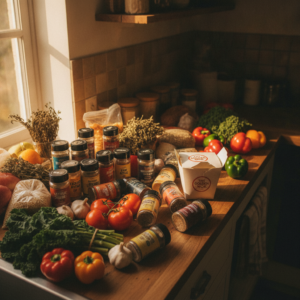
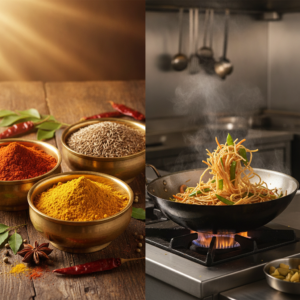
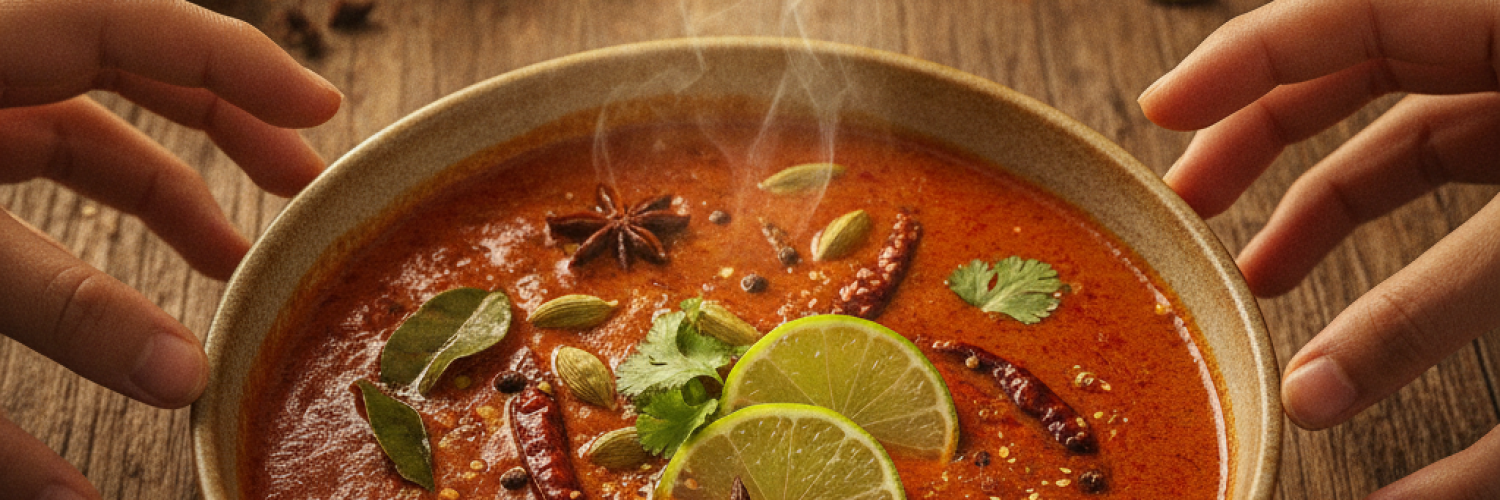
In Indian cooking specifically, heat is only one layer of a much more complex flavour profile. Turmeric, cumin, coriander, cardamom, fenugreek, and mustard seeds all contribute warmth, earthiness, and depth without necessarily adding significant capsaicin-based heat. This is why at 7 Spice Bistro, a dish can be intensely aromatic and deeply flavourful without being aggressively spicy — and why guests who believe they “can’t handle spice” often leave surprised at how much they enjoyed their meal.
Hakka food adds another dimension entirely. Rooted in the Chinese Hakka community’s culinary traditions and adapted beautifully through Indian-Chinese fusion, hakka food mississauga lovers often describe the experience as bold, saucy, and satisfying — with heat that tends to be sharper and faster than the slow, layered warmth of traditional Indian curries. Our Hakka dishes at 7 Spice Bistro in Mississauga, Ontario are seasoned to bring out that signature punch without overwhelming the palate.
“At 7 Spice Bistro, we think of spice not as a challenge, but as a conversation between the cook and the guest. The goal is always to excite the palate, never to overwhelm it.”
How Hot Is Too Hot? Understanding Heat Levels in Indian and Hakka Cuisine
Heat tolerance is deeply personal, and there is no single right answer — but understanding the general heat spectrum helps you make better choices when you’re looking for the best food near me that also suits your comfort level.
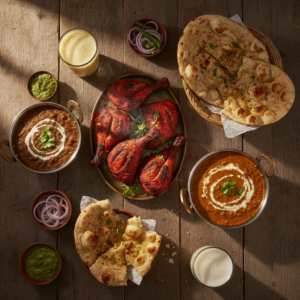
In Indian cuisine, heat levels are broadly shaped by the quantity and type of chillies used, the cooking method, and whether cooling elements like yogurt, cream, or coconut milk are incorporated. A butter chicken, for example, sits on the mild and creamy end of the spectrum. A vindaloo traditionally sits at the opposite extreme. Most restaurant menus — including ours — fall across a wide range between these two poles.
Mild, Medium, and Hot: What Each Level Means at Our Table
Mild dishes at 7 Spice Bistro are aromatic and richly spiced with warming spices but carry very little chilli heat. These are ideal for guests new to Indian food, children, or anyone who prefers flavour without fire. Think creamy kormas, lentil-based dals, and our paneer preparations.
Medium dishes introduce a noticeable warmth that builds gradually as you eat. They are satisfying for most regular spice eaters and represent the broadest slice of what we serve. Our team is always happy to describe where a specific dish lands on this spectrum when you ask.
Hot dishes are for guests who genuinely enjoy intense heat and want the full endorphin experience. When our team describes a dish as hot, we mean it — these are not “spicy by Canadian standards” dishes. They are the real thing, prepared with the same fresh, locally-sourced ingredients that go into everything on our menu.
In Hakka cuisine, heat tends to come in shorter, sharper bursts — from green chillies, chilli oil, and fermented sauces — rather than the slow-building warmth of Indian curry bases. If you are searching for bold hakka food mississauga and want to know what to expect, ask your server to walk you through the heat notes on specific dishes. We are genuinely happy to guide you.
For more practical guidance on navigating our menu and timing your visit, our Indian Restaurant Open Now: A Practical, No-Nonsense Guide is a useful resource we put together for exactly this kind of question.
Is Spicy Food Actually Good for You? What the Evidence Suggests
Spicy food has genuine, well-documented health associations — though we want to be clear that we are a restaurant, not a medical authority, and individual circumstances always vary.
Capsaicin has been studied extensively by nutrition researchers and is associated with a range of potential benefits, including its role in supporting metabolic rate and appetite regulation. According to research published by institutions studying dietary patterns globally, populations with diets rich in chilli-based spices show interesting metabolic and cardiovascular trends — though diet, lifestyle, and genetics all interact in complex ways.
What we can speak to with confidence, from seven years of preparing Indian and Hakka cuisine in Mississauga, Ontario, is the quality of ingredients behind our spice profiles. We use fresh chillies, whole spices that we source carefully, and age-old recipes passed down through generations. There are no mystery powders or artificial heat enhancers on our line. When you taste heat in our food, it comes from real ingredients prepared with genuine technique.
The broader point is this: spicy food enjoyed in moderation and prepared with quality ingredients is part of one of the world’s oldest and most celebrated culinary traditions. Indian cooking in particular draws on Ayurvedic principles that have guided the use of spices for centuries — not just for flavour, but for their role in a balanced, wholesome diet.
If you are curious about how we approach seafood preparations specifically — another category where spice plays a beautiful, nuanced role — our piece on Seafood at an Indian Restaurant? Here’s Why It Works So Well goes deep on that intersection of fresh ingredients and bold seasoning.
Where Can I Find Great Spicy Food Near Me in the GTA?
If you’re searching for spicy food near me in the Greater Toronto Area, the honest answer is that quality and authenticity vary significantly across restaurants. Not all places that claim to serve spicy Indian or Hakka food are using the same standards of freshness, technique, or recipe authenticity.
When people ask us what separates the top indian restaurants in mississauga from the rest, our answer consistently comes back to three things: ingredient quality, cooking technique, and the willingness to honour traditional recipes rather than shortcut them for speed or cost.
At 7 Spice Bistro Meadowvale in Mississauga, we have spent seven years building our reputation on exactly those three pillars. Our kitchen uses locally-sourced fresh produce wherever possible, combines it with spice blends prepared using age-old recipes, and serves it in a cozy, welcoming space that feels comfortable for families, couples, and professionals alike.
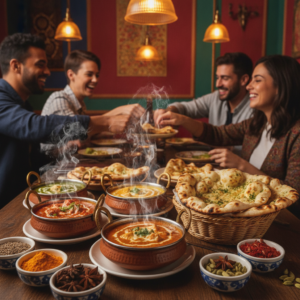
The combination of Indian and Hakka cuisines under one roof is also genuinely rare in the GTA. If you’re the kind of person who loves the idea of ordering a rich butter chicken alongside crispy Hakka noodles for the table, you’ve already narrowed your search considerably — and we are one of the few places that does both with real care and consistency.
We also have free WiFi and a modern, comfortable dining space — practical details that matter when you want to linger over a long family dinner or catch up with colleagues over a weekday lunch.
And if you are planning a larger gathering — a birthday, a corporate event, a wedding celebration — our full-service catering is available throughout the GTA. Our colleagues at Catering Services in Mississauga: How to Choose the Right Caterer for Your Event have written a helpful breakdown of what to look for when sourcing a caterer for your next big occasion.
Why Do Some People Love Spice and Others Struggle With It?
Heat tolerance is not just a matter of willpower — it has a genuine physiological basis, and it changes over time with exposure. Understanding this helps explain why a dish your friend describes as “not even that spicy” can feel like a five-alarm event to someone else at the same table.
Individuals vary in the number and sensitivity of TRPV1 receptors — the pain receptors that respond to capsaicin — in their mouth and throat. Some people are simply more sensitive at a biological level, and that is completely normal. Regular exposure to capsaicin has been shown to reduce receptor sensitivity over time, which is why habitual spice eaters often find their tolerance growing gradually.
Cultural context matters too. Guests who have grown up eating Indian home cooking in Mississauga, Ontario often have a natural familiarity with the spice profiles that newcomers to the cuisine find surprising at first. That said, we firmly believe great Indian and Hakka food is for everyone — and our menu is designed to welcome all heat tolerances, not just the fearless ones.
If heat ever catches you off guard at the table, dairy is your best friend. Milk proteins, particularly casein, bind to capsaicin and help neutralise the burning sensation far more effectively than water. This is why yogurt-based raitas and creamy lassis have been served alongside spicy Indian food for centuries — they are not just delicious accompaniments; they are the original antidote.
Our staff at 7 Spice Bistro are trained to help every guest navigate their comfort zone. We take genuine pride in making every table feel welcome — whether you’re a seasoned spice enthusiast or ordering Indian food for the very first time.
Ready to Put Your Heat Tolerance to the Test?
Come discover why food lovers across the GTA call 7 Spice Bistro one of their go-to destinations for authentic Indian and Hakka cuisine in Mississauga. From gentle and aromatic to boldly spiced, there is a dish here with your name on it. Dine in, or ask us about our full catering packages for your next event.
✍️ Written by the Team at 7 Spice Bistro
We are the chefs, servers, and food lovers behind Mississauga’s home of authentic Indian and Hakka cuisine. With seven years of experience crafting bold, flavourful dishes from fresh, locally-sourced ingredients, we write from the kitchen outward — because we believe great food deserves honest conversation.
Frequently Asked Questions
How do I know which dishes at 7 Spice Bistro are too spicy for me?
The best approach is simply to ask your server — our team is genuinely knowledgeable about the heat level of every dish on the menu and happy to guide you based on your preference. As a general rule, dishes described as korma, tikka masala, or butter-based tend to be mild, while anything labelled vindaloo, achari, or featuring fresh green chillies will carry more heat. When in doubt, start mild and work your way up — Indian cuisine rewards curiosity, and there is plenty of delicious middle ground.
What makes Hakka food different from traditional Indian food in terms of spice?
Hakka food blends Chinese cooking techniques with Indian spice sensibilities, resulting in a flavour profile that is distinct from either cuisine on its own. The heat in Hakka dishes tends to be sharper and more immediate — driven by fresh chillies, chilli sauces, and high-heat wok cooking — whereas Indian curry-based heat builds more slowly and is often tempered by cream, yogurt, or coconut. At 7 Spice Bistro, our Hakka dishes are prepared with the same care as our Indian menu, and both cuisines are worth exploring side by side at the same table.
Why does spicy food sometimes taste better the next day as leftovers?
This is a real phenomenon and one of our favourite food science facts. When spiced dishes rest overnight, the fat-soluble flavour compounds in spices — including capsaicin — continue to dissolve into the cooking oils and sauces, producing a more evenly distributed, deeper flavour. The heat can also feel slightly mellower as the spice compounds integrate more fully into the dish. It is one reason Indian curries, in particular, are celebrated as ideal make-ahead meals. That said, we think they are pretty excellent fresh from our kitchen too.
Can I bring my whole family, including young children, to 7 Spice Bistro?
Absolutely — 7 Spice Bistro in Mississauga is designed to be a family-friendly space, and we welcome guests of all ages. Our menu includes mild, aromatic dishes that are genuinely suitable for younger palates and first-time diners, alongside bolder options for the heat-seekers at the table. Families are among our most valued regulars, and creating a warm, welcoming atmosphere where everyone feels comfortable is something we take seriously. If you are planning a family celebration or a larger group dinner, our catering and dine-in teams are happy to help you plan ahead.