If you’ve ever typed “best punjabi restaurants near me” into your phone and felt overwhelmed by the results — some promising, many disappointing — you already know how hard it is to find food that actually delivers on the word authentic. Punjabi cuisine is one of the most beloved regional cooking traditions in the world, and yet in 2026, so many restaurants in the Greater Toronto Area serve a diluted, crowd-pleasing version of it that barely scratches the surface of what this food is truly capable of. At 7 Spice Bistro, we’ve spent seven years in Mississauga doing the opposite — staying fiercely close to the original techniques, the real spice profiles, and the kind of bold, comforting flavours that make Punjabi cooking so deeply memorable. This guide is our way of helping you understand what authentic Punjabi cuisine actually tastes like, so you know exactly what to look for — and what to expect — before you sit down to your next meal.
⚡ QUICK ANSWER
Authentic Punjabi cuisine is defined by slow-cooked lentils, tandoor-fired breads, clay-pot curries, and a confident use of warm spices like cumin, coriander, and garam masala. True Punjabi food is rich, hearty, and deeply aromatic — a far cry from the over-sweetened, under-spiced dishes many GTA restaurants pass off as the real thing. At 7 Spice Bistro in Mississauga, every dish is rooted in age-old recipes using fresh, locally sourced ingredients.
What Makes Punjabi Cuisine Different from Other Indian Regional Cooking?
Punjabi cuisine stands apart from other Indian regional traditions because of its fearless use of whole spices, slow-cooked proteins, and dairy — especially cream, butter, and ghee — layered together into dishes that feel simultaneously rustic and luxurious. India is a vast country with dozens of deeply distinct culinary traditions, and understanding that distinction is the very first step to recognising the real thing when it’s on the plate in front of you.
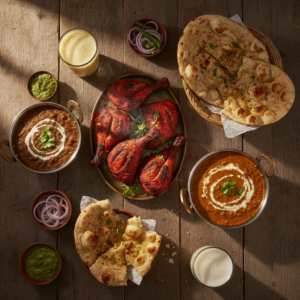
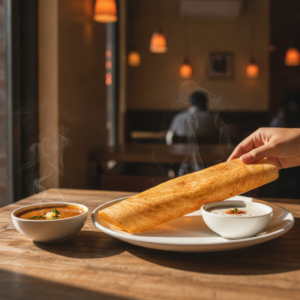
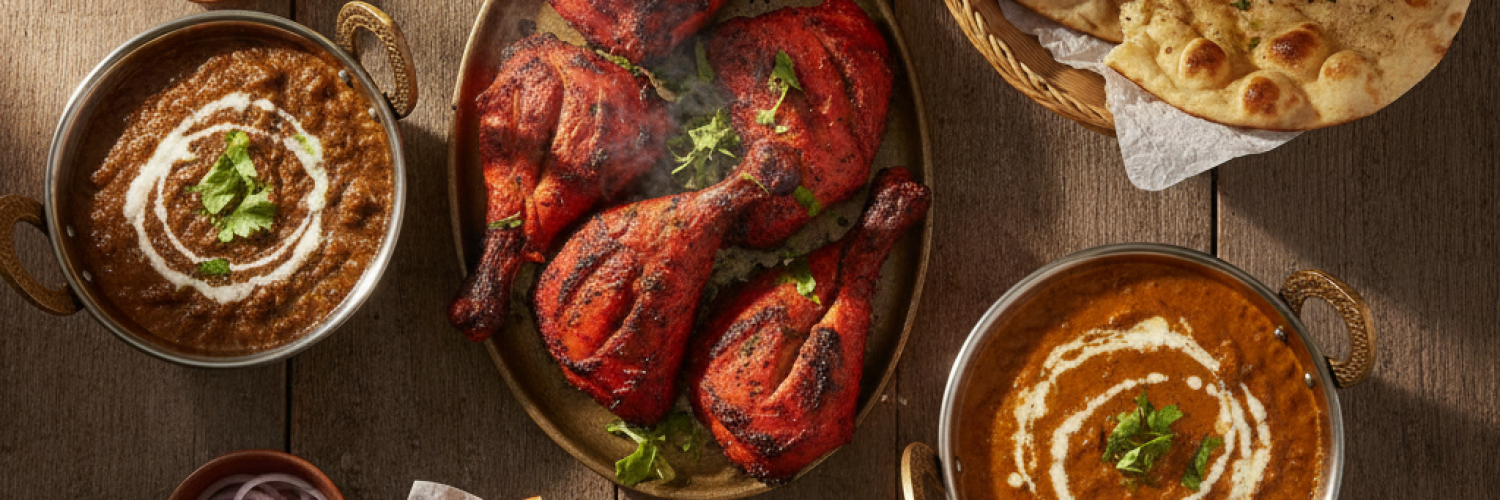
The Punjab region historically straddles what is now northwestern India and eastern Pakistan, and its food reflects the agricultural abundance of that fertile land. Wheat is king here — not rice — which is why you’ll find the table anchored by pillowy naan, layered parathas, and the crispy-edged roti pulled fresh from a tandoor oven. That tandoor, a cylindrical clay oven that reaches searing temperatures, is not just a cooking tool in Punjabi cuisine. It is a cultural institution. Meats marinated in yoghurt and spice emerge smoky and tender, and breads develop that distinctive char that no stovetop can replicate.
Compare that to South Indian cuisine — coconut-forward, rice-based, and built around tamarind and curry leaves — and the difference becomes immediately clear. Or contrast it with the delicate, saffron-infused Mughlai tradition of Lucknow, where restraint is considered an art form. Punjabi food doesn’t deal in restraint. It deals in generosity. Generous portions, generous spice, generous warmth.
At 7 Spice Bistro in Mississauga, we’ve always believed that understanding where a dish comes from is what makes eating it more meaningful. When our guests sit down and taste a properly made dal makhani — simmered low and slow for hours, finished with cream and a knob of butter — they’re tasting a recipe tradition that stretches back generations. That context matters. It’s what separates a meal from an experience.
What Are the Essential Dishes That Define Authentic Punjabi Food?
The essential dishes of authentic Punjabi cuisine include butter chicken, dal makhani, sarson da saag, tandoori meats, and chole bhature — each one rooted in specific technique, not shortcut sauces. If you’re searching for authentic indian cuisine and want to know whether the kitchen actually knows what it’s doing, these are the dishes to order first. They’re unforgiving — there’s nowhere to hide bad technique when the recipe has only five key components.
Butter Chicken (Murgh Makhani)
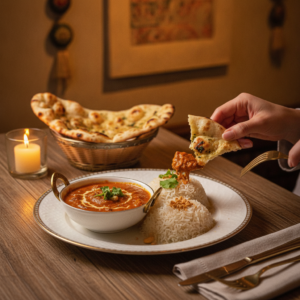
Few dishes are more globally recognised and more widely misrepresented than butter chicken. The original, developed in Delhi in the mid-20th century, is a tomato-based gravy enriched with butter and cream, with just enough spice to complement rather than overpower the slow-marinated chicken. It should taste complex and slightly tangy, with a velvety texture that coats the back of a spoon. A version that tastes like sweetened tomato soup with a few floating chicken cubes is not butter chicken — it’s an approximation.
Dal Makhani
Dal makhani is a masterclass in patience. Black lentils and kidney beans are soaked overnight, then cooked slowly over low heat — traditionally for eight hours or more — until they break down into a thick, smoky, deeply savoury stew. The finishing touch is a generous swirl of cream and butter that turns the humble legume into something almost indulgent. If a restaurant’s dal makhani arrives in fifteen minutes, it almost certainly came from a reheated batch or a concentrate. Real dal makhani cannot be rushed.
Sarson da Saag with Makki di Roti
This combination — mustard greens cooked down with ginger, garlic, and green chillies, paired with a flatbread made from cornmeal — is arguably the most distinctly Punjabi dish in existence. It is a winter harvest meal, rooted in the agricultural calendar of the Punjab, and it tastes like the land itself. The greens are slightly bitter, the bread is coarsely textured, and the whole thing is meant to be eaten with a pat of fresh white butter. It is humble, honest food, and it is extraordinary.
Chole Bhature
A staple street food that has graduated to sit proudly on restaurant menus across North America, chole bhature is spiced chickpeas served alongside deep-fried, puffed leavened bread. The chickpeas should be cooked in a dark, complex gravy — dried pomegranate powder and black cardamom are non-negotiable — and the bhatura should arrive at the table hot, blistered, and slightly crispy at the edges. This dish is not subtle. It is bold, punchy, and completely satisfying.
“Authentic Punjabi food doesn’t try to please everyone at once. It commits fully to bold flavour, generous spice, and the kind of comfort that only comes from cooking something slowly and with intention. That’s the standard we hold ourselves to every day at 7 Spice Bistro.”
How Do You Know If a Punjabi Restaurant Is Truly Authentic?
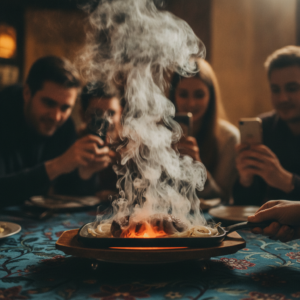
A truly authentic Punjabi restaurant reveals itself through the aroma before a single dish arrives at your table — the smell of toasted cumin, charred bread, and slow-braised lentils is something no artificial shortcut can replicate. When people search for indian food near me or best indian food near me, they’re often hoping for that gut-level sense of recognition, the feeling that what they’re eating is the real thing. Here’s what to look for.
The Spice Profile Should Be Layered, Not One-Dimensional
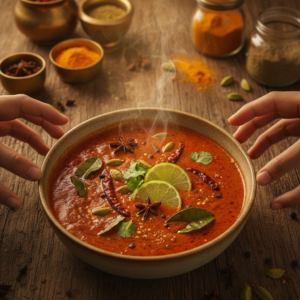
A common misconception about Indian cuisine — and Punjabi food specifically — is that “spicy” means hot. Real Punjabi spicing is about depth and complexity, not heat alone. A properly made dish will have warm notes from cinnamon and cloves, earthiness from cumin and coriander, and a base of slow-cooked alliums that tie it all together. Heat is one instrument in a large orchestra. When heat is the only instrument you can hear, the kitchen has simplified things too much.
The Bread Programme Matters
At a genuine Punjabi restaurant, bread is not an afterthought. Naan should arrive with char marks and a slight chewiness that tells you it was made to order in a very hot oven, not warmed from a package. Parathas should be flaky and buttery. Roti should be thin, pliable, and slightly smoky. If the bread arrives limp and uniform — the same colour all the way around — it wasn’t made fresh.
Locally Sourced Ingredients Make a Measurable Difference
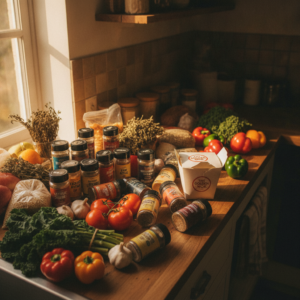
At 7 Spice Bistro in Mississauga, we source our ingredients locally wherever possible and combine them with age-old recipes passed down through generations of cooking. Fresh produce tastes different. It behaves differently in a curry, it holds texture better when slow-cooked, and it contributes a vibrancy to the finished dish that older, mass-distributed ingredients simply cannot match. This is a commitment that many restaurant kitchens quietly abandon in the name of convenience, and it shows in the final result.
You can also explore our broader approach to local dining in our guide to Dining Out in Mississauga: A Neighbourhood-by-Neighbourhood Food Guide, which gives a fuller picture of what the Mississauga food scene has to offer across different pockets of the city.
Why Mississauga Has Become a Hub for Authentic Indian and Hakka Cuisine
Mississauga has quietly built one of the most vibrant South Asian food communities in Canada, shaped by decades of immigration from Punjab, Gujarat, Tamil Nadu, and beyond — and that cultural richness is precisely what makes eating here feel so different from other parts of the GTA. If you’re searching for an indian restaurant near me and you happen to be anywhere in the Greater Toronto Area, Mississauga should be near the top of your list.
The city’s South Asian population has created both the demand and the supply for genuine, uncompromised cooking. Restaurants here aren’t tailoring their menus for a crowd unfamiliar with the food — they’re cooking for communities who grew up eating it and who will notice immediately when something is off. That accountability produces better food. It keeps kitchens honest.
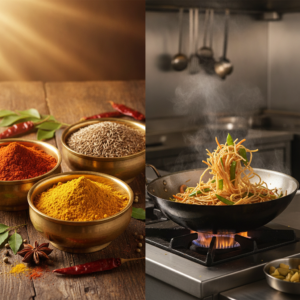
What’s particularly interesting about Mississauga’s dining scene is the way Indian and Hakka cuisines have developed side by side. Hakka cuisine — the Indo-Chinese fusion tradition born from the Chinese community in Kolkata — has found an enthusiastic audience across the GTA, and for good reason. Dishes like chilli chicken, Hakka noodles, and Manchurian-style preparations offer something genuinely distinct: the bold saucing of Chinese cooking filtered through an Indian palate, punchy with soy, vinegar, garlic, and fresh chillies. At 7 Spice Bistro, we serve both traditions side by side, which means a table can move between a creamy Punjabi curry and a plate of crispy Hakka-style seafood in the same meal. It’s a combination that sounds unlikely and tastes extraordinary.
If you’re curious about how we approach the broader question of building a satisfying group meal that spans both traditions, our guide to Biryanis, Curries, and Kebabs: How to Build the Perfect Indian Feast for a Group walks through the whole thing in detail.
Beyond Dine-In: How Authentic Punjabi Flavours Translate to Catering and Celebrations
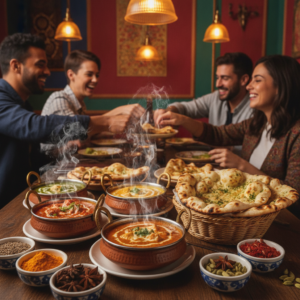
Authentic Punjabi food is, at its core, celebration food — and that’s why it translates so naturally into catering for weddings, family gatherings, and large events. Punjabi cooking has always been communal. The quantities are generous by design, the dishes are meant to be shared, and the flavours are bold enough to hold up beautifully whether they’re served fresh from the kitchen or presented buffet-style at a reception hall.
At 7 Spice Bistro, our full-service catering and wedding packages are built around the same quality and intention that defines our dine-in experience. We don’t have a separate “catering menu” that uses lesser ingredients or simplified recipes — our catering clients in Mississauga and across the GTA receive the same food, the same spice profiles, and the same care that our restaurant guests experience every evening.
Personalised service is something we take seriously. A wedding reception with Punjabi food at the centre means guests expect authenticity — they know what dal makhani should taste like, they’ve grown up eating chole at celebrations, and they’ll notice if the tandoori chicken was made half-heartedly. We plan every catering event with that level of scrutiny in mind, working closely with families and event organisers to build menus that feel right for the occasion.
Families in Mississauga have trusted us with milestone celebrations for seven years, and each one reinforces something we already knew: good Punjabi food doesn’t just feed people. It anchors a memory. It becomes part of the story of an event. That’s a responsibility we take seriously, and it shapes every decision we make in the kitchen.
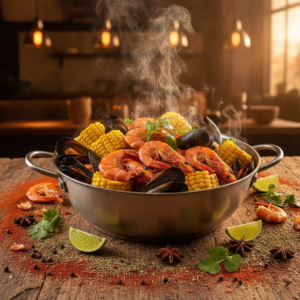
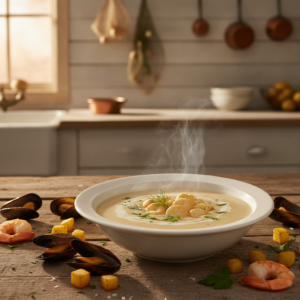
We’ve also expanded our seafood offerings to bring the same quality and craft to ocean-forward dishes — and if you’re curious about how seafood fits into an Indian and Hakka menu, our article on the Seafood Chowder Recipe: Everything to Know Before You Decide is worth a read for a deeper look at how we approach seafood preparation with care and technique.
Ready to Taste Authentic Punjabi Cuisine in Mississauga?
Whether you’re planning a casual dinner, a family celebration, or a full catering event, 7 Spice Bistro is where genuine Punjabi and Hakka flavours come together under one welcoming roof. Come hungry. Leave with a story.
✍️ Written by the Team at 7 Spice Bistro
We’re the team behind 7 Spice Bistro in Mississauga, Ontario — seven years in the kitchen, thousands of meals served, and a commitment to authentic Indian and Hakka cuisine that has never wavered. We write about food because we love it, and because we believe that understanding what you’re eating makes every meal better.
Frequently Asked Questions
What is the difference between Punjabi cuisine and general “Indian food”?
Punjabi cuisine is one specific regional tradition within the vast landscape of Indian cooking, and it’s defined by tandoor-fired breads, dairy-rich gravies, slow-cooked lentils, and a bold, warm spice profile built around cumin, coriander, and garam masala. “Indian food” as a broad category covers dozens of regional traditions — from the coconut-based cooking of Kerala to the rice-forward cuisine of West Bengal — each with its own completely distinct ingredients, techniques, and flavours. When most people in North America picture a curry with naan, they’re picturing Punjabi cooking specifically, which reflects just how globally influential this regional tradition has become.
How can I find the best Punjabi restaurants near me in the GTA?
The most reliable way to find genuinely good Punjabi food in the Greater Toronto Area is to look for restaurants that have a consistent reputation within the South Asian community itself — these diners know the cuisine intimately and will not return to a restaurant that cuts corners. Reading reviews that specifically mention the freshness of the bread, the complexity of the gravy, or the authenticity of particular dishes is far more useful than simply sorting by star rating. For families and couples in Mississauga and the wider GTA, 7 Spice Bistro has spent seven years building exactly that kind of reputation for honest, high-quality Indian and Hakka cuisine.
Why does authentic Punjabi food taste so different from what many restaurants serve?
The gap between authentic Punjabi cooking and what many restaurants serve comes down to time, technique, and ingredient quality — three things that are difficult to scale cheaply. Real dal makhani requires many hours of slow cooking. Real tandoori chicken requires a genuine clay oven and a properly spiced overnight marinade. Real butter chicken is built on a base of roasted tomatoes and whole spices, not a ready-made sauce. Restaurants that prioritise speed and cost over craft will simplify each of these steps, and the result is food that is recognisable but fundamentally different — milder, blander, and texturally flat compared to the original. At 7 Spice Bistro in Mississauga, we don’t take those shortcuts.
Can I order authentic Punjabi food from 7 Spice Bistro for a wedding or large event?
Absolutely — catering for weddings, family celebrations, and large events is one of our core services at 7 Spice Bistro, and we bring the same quality and care to every off-site event that we deliver in our Mississauga dining room. Our full-service catering and wedding packages are fully personalised, meaning we work directly with you to build a menu that reflects the occasion and the guests. Whether you’re planning an intimate gathering or a large wedding reception, our team handles the details so you can focus on celebrating. Reach out through our website to start the conversation.