What makes a great tandoor? Inside the cooking method behind Indian restaurant favourites — this is the question we get asked more than almost any other at our kitchen pass, and honestly, it’s one of our favourite conversations to have. In 2026, tandoor cooking is having a genuine cultural moment across North America, with food lovers in Mississauga, Ontario and the wider Greater Toronto Area developing a deeper curiosity about the craft behind the dishes they love. People aren’t just ordering naan anymore — they’re asking why it tastes the way it does, why the char on a chicken tikka is so different from anything they can recreate at home, and what separates a restaurant that truly understands the tandoor from one that’s just going through the motions.
At 7 Spice Bistro, we’ve spent seven years mastering the art of authentic Indian cuisine — and the tandoor is at the heart of so much of what we do. Whether you’re a longtime regular or you’ve been searching for an indian restaurant near me and just found us, we want to pull back the curtain on this incredible cooking vessel and explain exactly why it makes such a profound difference to your plate.
⚡ QUICK ANSWER
A great tandoor is a cylindrical clay oven that reaches temperatures between 480°C and 500°C (around 900°F), cooking food with intense radiant heat, live flame, and the natural moisture of the clay itself. The result is food that is simultaneously smoky, charred on the outside, and remarkably tender on the inside — a combination no conventional oven can replicate. The quality of a tandoor dish depends on the clay’s age, the quality of the marinade, and the skill of the cook managing the heat at every stage.
What Exactly Is a Tandoor, and Why Does It Matter So Much?
A tandoor is a traditional cylindrical clay oven, and it matters because no other cooking vessel in the world produces quite the same combination of searing heat, live flame, and clay-infused moisture. The tandoor is not a modern invention — it has been used across the Indian subcontinent, Central Asia, and the Middle East for thousands of years, and its fundamental design has barely changed because it simply works extraordinarily well.
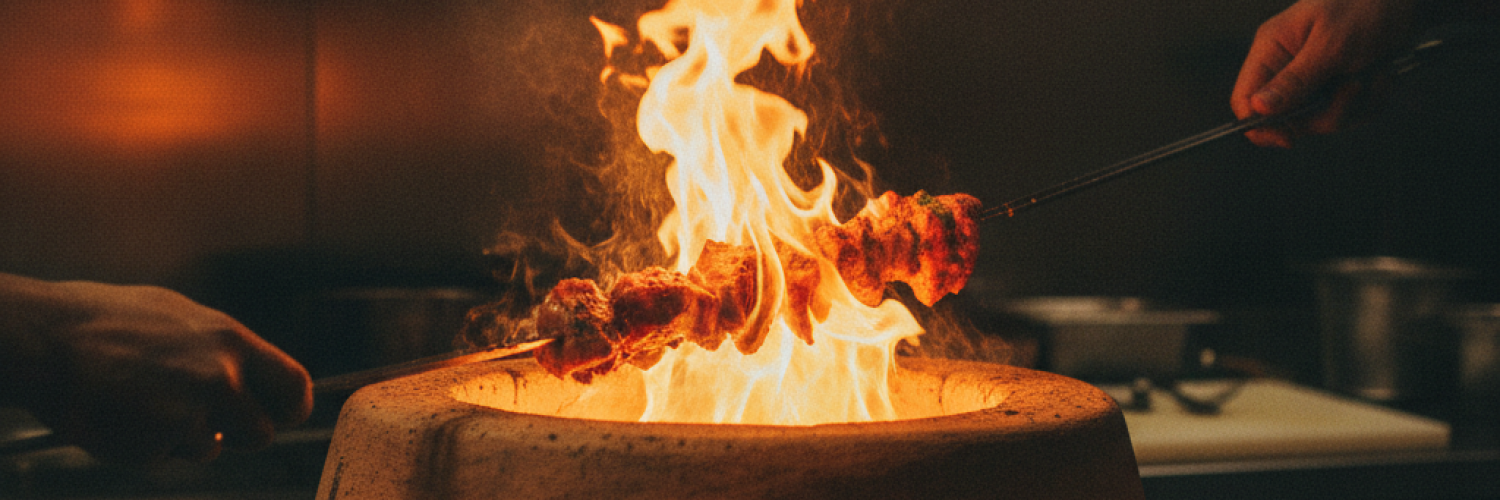
The oven is typically made from clay or ceramic, set into the ground or a thick insulating base, and fired using charcoal or wood. As it heats up, the clay walls themselves become part of the cooking process — they absorb and radiate heat in a way that metal ovens never can, creating an environment of intense, even, enveloping warmth. Naan bread is slapped directly onto those inner walls, which is why it blisters and chars in those signature patterns. Skewered meats hang down inside the cavity, cooking simultaneously from the direct flame below and the radiant heat on all sides.
When you search for indian food near me and walk into a restaurant, one of the best signs of authenticity is the presence of a working tandoor. It’s not a decorative feature — it’s the engine of an entire category of dishes, from breads to kebabs to whole roasted proteins. At 7 Spice Bistro in Mississauga, our tandoor is central to how we deliver those deep, layered flavours our guests come back for again and again.
“The tandoor is not just a cooking tool — it’s a philosophy. It asks you to understand heat, timing, and ingredients at an instinctive level. You can’t set it and forget it. Every cook has to be present, attentive, and experienced.”
How Does a Tandoor Actually Cook Food Differently Than a Regular Oven?
A tandoor cooks food differently because it combines three distinct heat sources simultaneously — radiant heat from the clay walls, convection heat from the rising hot air inside the cavity, and direct infrared heat from the live flame at the base. A conventional oven, no matter how powerful, only uses one or two of these mechanisms. The result is food that cooks faster, seals more efficiently, and develops a depth of flavour that is genuinely impossible to replicate in a home kitchen.
Think about what happens to a chicken tikka inside a tandoor. The marinade — usually a yogurt and spice blend that has been working into the meat for hours — hits that extreme heat and immediately caramelises on the surface. The outside chars and crisps in a matter of minutes while the inside stays moist, because the heat is so intense and even that the moisture is driven inward rather than evaporated away. This is the Maillard reaction happening at an almost violent speed, and it produces those complex, roasted, slightly smoky flavour compounds that define great tandoor cooking.
For breads like naan and roti, the direct contact with the clay wall is everything. The dough sticks to the hot surface and puffs dramatically as its interior moisture turns to steam, creating those pillowy air pockets and charred spots that make freshly baked tandoor bread one of the great simple pleasures in any Indian restaurant experience. No gas oven, pizza stone, or cast iron pan gets hot enough or behaves in quite the same way.
The Role of the Marinade in Tandoor Success
The marinade is not just flavouring — it is a technical component of the cooking process. Yogurt-based marinades act as a buffer against the extreme heat, insulating the protein just enough to allow the inside to cook through before the outside burns. The spices in the marinade — cumin, coriander, turmeric, garam masala, and others — each respond differently to high heat, some blooming and deepening in flavour while others release aromatic oils that penetrate the food. A rushed marinade, or one made with inferior spices, produces a noticeably flat result even in the best tandoor.
At 7 Spice Bistro, we use fresh, locally-sourced ingredients combined with age-old recipes that have been refined over our seven years in Mississauga, Ontario. Our spice blends aren’t shortcuts or pre-mixed imports — they reflect the genuine culinary traditions we’re proud to represent, and they’re designed specifically for how our tandoor behaves at its peak operating temperature.
What Are the Classic Tandoor Dishes Every Indian Food Lover Should Know?
The classic tandoor dishes include tandoori chicken, seekh kebab, paneer tikka, and a range of traditional breads — and every one of them showcases a different strength of the clay oven. Understanding what each dish is doing in that heat helps you appreciate the skill involved and makes the experience of ordering from a genuine Indian restaurant menu far more rewarding.
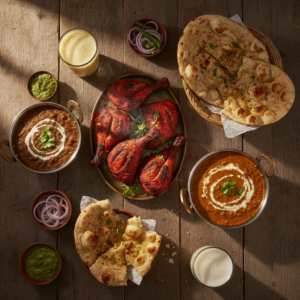
Tandoori Chicken is the dish most people associate with the tandoor, and for good reason. Whole pieces of chicken on the bone are marinated deeply, then cooked on long metal skewers suspended into the oven. The bone conducts heat from the inside while the tandoor attacks from outside, resulting in that perfect combination of crisp, spiced skin and juicy, flavourful meat. The characteristic reddish colour comes traditionally from Kashmiri red chilli, which colours without excessive heat.
Seekh Kebab — minced meat mixed with spices and shaped around flat skewers — requires enormous skill from the cook. The mixture has to be worked and seasoned to exactly the right consistency, firm enough to hold its shape on the skewer but tender enough to melt when eaten. In the tandoor, seekh kebabs cook in just minutes, developing an outer crust while remaining juicy inside. No grill or pan achieves the same result.
Naan is the bread that most diners in Mississauga, Ontario and across the GTA are most familiar with, and fresh tandoor naan is categorically different from anything sold in a supermarket bag. Proper naan is alive — it has active leavening, a slightly chewy interior, charred blisters, and a subtle buttery-smoky quality that only comes from those few seconds pressed against a 500-degree clay wall.
Paneer Tikka is a vegetarian showcase that proves the tandoor is not just about meat. Cubes of fresh Indian cottage cheese, marinated in spiced yogurt with peppers and onions, cook quickly on skewers and develop a golden-charred exterior while the paneer inside stays firm and warm. It’s a dish that requires both a great tandoor and great-quality paneer — we make no compromises on either.
Why Is Tandoor Cooking Particularly Important for Seafood?
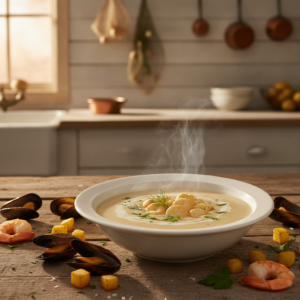
Tandoor cooking is especially well-suited to seafood because the extreme, fast heat seals in moisture and prevents the overcooking that ruins fish and prawns in lower-temperature environments. Seafood in the tandoor cooks in minutes rather than the extended times required in conventional ovens, and the result is a texture — firm on the outside, succulent within — that makes Indian-style tandoor seafood one of the most underrated dining experiences available.
In Mississauga, Ontario, we find that a lot of guests are genuinely surprised when they discover how well seafood and Indian cooking work together. The spices used in a tandoor seafood marinade — think ajwain (carom seeds), lemon, fresh ginger, and chilli — are drawn specifically from coastal Indian traditions where seafood has been cooked this way for generations. Our seafood dishes at 7 Spice Bistro reflect those traditions honestly and deliciously.
If you’d like to explore this further, we’ve written in depth about the subject in our piece on Seafood at an Indian Restaurant? Here’s Why It Works So Well — it’s worth a read before your next visit.
How Does Hakka Cuisine Complement the Tandoor Experience at 7 Spice Bistro?
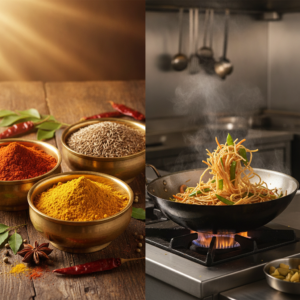
Hakka cuisine complements the tandoor experience by offering a bold, wok-fired counterpart — while the tandoor brings deep clay-oven char and smoky spice, Hakka dishes bring the intense, fast heat of a high-flame wok and the savoury complexity of Indo-Chinese spicing. Together on one menu, they represent two of the most exciting high-heat cooking traditions in South Asian dining.
Hakka cuisine — the distinctive Indo-Chinese cooking style that developed in the Indian immigrant communities of Kolkata and spread across the subcontinent — is one of our great passions at 7 Spice Bistro. When people search for hakka near me in the GTA, we want to be the answer they find, because we take this cuisine as seriously as we take our Indian kitchen. If you’re searching for the best hakka Mississauga has to offer, our menu brings these two bold culinary traditions together under one roof in a way that feels natural rather than forced.
The cooking principles actually have more in common than people realize — both rely on extreme heat, fast cooking times, and the skill of an experienced cook who knows exactly when to move and when to let the food sit. Both celebrate bold flavour without excess fat. And both are genuinely at their best when the ingredients are fresh, the technique is honest, and the kitchen cares about the result.
Guests who come in for tandoor favourites and discover our Hakka menu — dishes like chilli chicken, Manchurian, Hakka noodles, and fried rice with Indian spice profiles — often tell us they didn’t know they needed both until they tried them together. That’s exactly the kind of discovery we love facilitating in our Mississauga dining room.
Is Tandoor Cooking Right for Catering and Large Events?
Yes — tandoor cooking is exceptionally well-suited to catering and large events because its speed and yield make it possible to serve large numbers of guests with consistently high-quality results, and because tandoor dishes hold their flavour and texture better than many other preparations when transported and served at scale.
At 7 Spice Bistro, our full-service catering and wedding packages are built around the same kitchen philosophy that drives our dine-in experience — real tandoor cooking, fresh ingredients, and personalized service that treats every event as if it were our own celebration. We work closely with families across Mississauga and the Greater Toronto Area who are planning weddings, milestone birthdays, corporate lunches, and community gatherings, and we tailor every menu to the occasion rather than offering a rigid, one-size-fits-all package.
If you’re in the early stages of planning an event and wondering how to approach Indian catering, our comprehensive guide on Catering Services in Mississauga: How to Choose the Right Caterer for Your Event covers everything you need to consider — from menu selection to service logistics — and will help you ask the right questions of any caterer you’re evaluating.
Tandoor dishes are perennial crowd-pleasers at events because they appeal across generations and palate preferences. The visual drama of skewered meats and freshly baked breads, the unmistakable aroma, and the accessibility of flavours that are bold without being overwhelming — all of this makes a tandoor-forward catering menu one of the most celebrated choices for celebrations across the GTA.
What Should You Look for When Choosing an Indian Restaurant Near You?
When choosing an Indian restaurant near you, look for evidence of a working tandoor, a kitchen that makes its own spice blends, fresh locally-sourced ingredients, and a menu that shows genuine depth across multiple regional Indian cooking traditions rather than a narrow selection of generic dishes. These are the markers of a kitchen that respects the cuisine.
We understand that when families, couples, and professionals in the Greater Toronto Area are searching for restaurants near me or food near me on a weeknight or planning a special occasion, the sheer volume of options can be overwhelming. Not every place that describes itself as an Indian restaurant is operating with the same commitment to authenticity, ingredient quality, and culinary tradition.
At 7 Spice Bistro in Mississauga, we’ve built our reputation over seven years on a simple premise: serve the food we’re genuinely proud of, made the way it’s supposed to be made, at prices that don’t exclude the community we’re part of. We’re a family-friendly gathering space with a warm, welcoming atmosphere, free WiFi, and modern amenities — but the food always comes first, and the tandoor is always on.
If you’re trying to figure out the best time to visit or want to know more about our hours and availability, our guide on Indian Restaurant Open Now: A Practical, No-Nonsense Guide walks through exactly what to look for and how to plan your visit efficiently.
Ready to Experience the Tandoor for Yourself?
Come visit us at 7 Spice Bistro in Mississauga, Ontario — where the tandoor is always fired, the spices are always fresh, and every guest is welcomed like family. Whether you’re dining in, celebrating a special occasion, or planning catering for your next big event, our team is ready to make it exceptional.
✍️ Written by the Team at 7 Spice Bistro
We are a passionate team of cooks, hosts, and food lovers who have been serving authentic Indian and Hakka cuisine in Mississauga, Ontario for over seven years. Everything we write comes from real kitchen experience, genuine culinary tradition, and a deep love for sharing great food with the communities of the Greater Toronto Area.
Frequently Asked Questions
How hot does a tandoor oven get, and why does the temperature matter?
A properly fired tandoor reaches temperatures between 480°C and 500°C (approximately 900°F) — far beyond what any conventional home or commercial oven achieves. This extreme temperature is what produces the signature char, the rapid caramelisation of marinades, and the blistered texture of tandoor breads. At lower temperatures, the same dishes simply don’t develop the same crust, smoke, or depth of flavour. The temperature matters because it is the entire foundation of what makes tandoor food taste like tandoor food.
What is the difference between Indian food and Hakka food, and can I order both at 7 Spice Bistro?
Indian cuisine refers broadly to the rich, regionally diverse cooking traditions of the Indian subcontinent — from tandoor-fired North Indian dishes to complex spiced curries and coastal seafood preparations. Hakka cuisine is a distinct Indo-Chinese style that developed when Chinese immigrants settled in India, blending Chinese cooking techniques like wok-frying with Indian spices and ingredients. The result is a bold, flavourful, uniquely South Asian-Chinese style that stands entirely on its own. Yes, at 7 Spice Bistro in Mississauga, you can absolutely order from both menus on the same visit — and we highly recommend you do.
Why does naan from a tandoor taste so different from store-bought naan?
Store-bought naan is baked in a conventional oven at relatively low temperatures and is designed for shelf stability — not flavour or texture. Fresh tandoor naan is made with leavened dough, pressed directly against the clay walls of a 500-degree oven, and bakes in under two minutes. The result is a bread that is simultaneously blistered and charred on the surface, pillowy and slightly chewy inside, and carries a subtle smoky quality from the clay and flame that no factory process can reproduce. Once you’ve had genuine tandoor naan, the packaged version never quite satisfies the same way.
Can I arrange tandoor-style Indian food for a large event or wedding through 7 Spice Bistro?
Absolutely. Our catering and wedding packages at 7 Spice Bistro are fully customizable and designed to bring the same authentic Indian and Hakka food we serve in our Mississauga dining room directly to your event. We work with families, couples, and corporate clients across the Greater Toronto Area to design menus that suit the occasion, the guest count, and the flavour preferences of the group. Tandoor dishes are among our most requested catering items precisely because they photograph beautifully, smell incredible, and please a wide range of guests. Reach out to our team to discuss your event and we’ll build something memorable together.