If you’ve ever typed “thali near me” into your phone after a long day and felt immediately overwhelmed by the options — or worse, unsure what a thali even is — you’re not alone. Indian cuisine is one of the most layered, regional, and wonderfully complex food traditions in the world, and the thali is perhaps its greatest gift to the curious diner. It is a meal that says: don’t choose. Try everything. Here at 7 Spice Bistro in Mississauga, Ontario, we’ve been serving our guests this kind of generous, all-encompassing Indian dining experience for seven years — and in 2026, we still believe the thali is the single best introduction to everything Indian food has to offer.
⚡ QUICK ANSWER
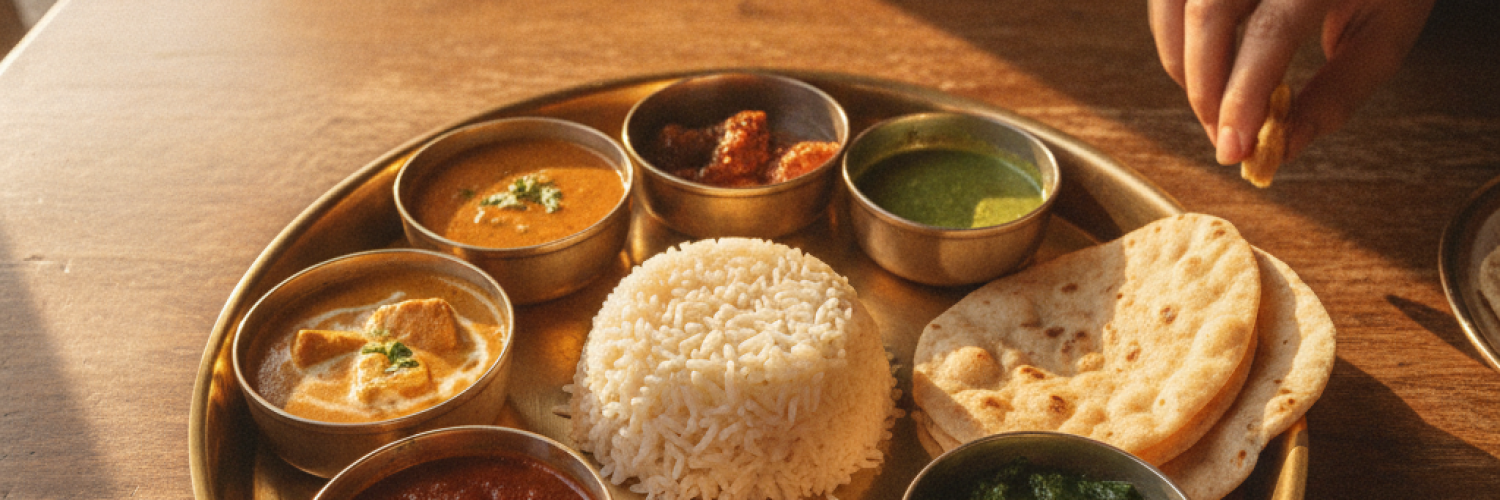
A thali is a traditional Indian meal served on a large round plate, featuring a curated selection of dishes — dal, sabzi, rice, bread, chutney, pickle, and often a sweet — all at once. It gives you a complete taste of a cuisine’s range in a single sitting, making it the ideal meal for first-timers and seasoned Indian food lovers alike.
What Exactly Is a Thali, and Where Does It Come From?
A thali is a traditional Indian meal served on a single large plate — the word itself literally means “plate” in Hindi — and it has been a cornerstone of Indian dining for centuries. The concept is simple but brilliant: instead of ordering one dish, you receive a carefully balanced spread of multiple small portions that together form a nutritionally complete, flavour-diverse meal. Think of it as the Indian answer to the tasting menu, except it has existed long before tasting menus were fashionable in fine dining restaurants.
The origins of the thali are deeply tied to the Ayurvedic philosophy of balance — the idea that a satisfying meal should engage all six tastes: sweet, sour, salty, spicy, bitter, and astringent. Every component on a thali plate serves a purpose, both culinary and nutritional. The dal provides protein. The rice or roti offers sustained energy. The chutneys and pickles stimulate digestion. The sweet at the end rounds the meal and signals completion. It is a system refined over generations, not invented by a marketing team.
Across India, thalis vary dramatically by region. A Rajasthani thali from the desert northwest is rich with ghee, lentils, and bajra bread. A Bengali thali from the east leans toward fish, mustard, and subtle sweetness. A South Indian thali — often served on a banana leaf — features rice, sambar, rasam, and coconut-based chutneys. Each version is a window into the culture, geography, and local produce of its origin. That regional diversity is part of what makes searching for Indian food near me so rewarding: no two authentic Indian kitchens tell exactly the same story.
“The thali isn’t just a meal — it’s a philosophy. It says that balance, generosity, and variety belong on the same plate, always.”
What’s Actually on the Plate? A Guide to Every Component
Every component of a thali earns its place on the plate. Understanding what you’re eating — and why it’s there — transforms the experience from eating a meal to reading a story written in spice, technique, and tradition.
Dal — The Soul of the Thali
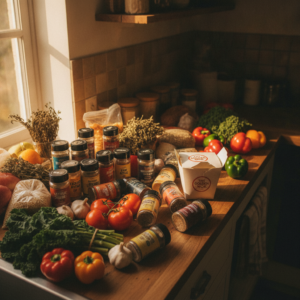
Dal is the lentil dish that anchors almost every thali in existence. It might be a thin, soupy toor dal tempered with mustard seeds and curry leaves, or a thick, creamy dal makhani slow-cooked with butter and tomato. Whatever its form, dal is the heartbeat of Indian home cooking. It is comforting, deeply flavoured, and built for scooping with fresh bread. At our kitchen in Mississauga, we use age-old recipes combined with fresh, locally-sourced ingredients to bring that same homemade quality to every bowl.
Sabzi — The Vegetable Dish
Sabzi simply means “vegetable” in Hindi, and the thali will always include at least one dry or semi-dry vegetable preparation. This could be aloo gobi (potato and cauliflower), bhindi masala (spiced okra), palak paneer (spinach with fresh cottage cheese), or a dozen other preparations depending on the season and the chef’s inspiration. The sabzi adds textural contrast to the smoother dal and provides that important bitter or earthy note that rounds out the plate.
Rice and Roti — The Foundation
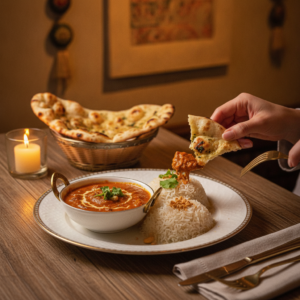
Every thali comes with a carbohydrate base — usually both rice and bread. The rice might be plain steamed basmati, or it might be a lightly seasoned jeera (cumin) rice. The bread could be a soft, whole wheat roti, a puffed phulka, or a flaky paratha. These aren’t afterthoughts. They are the vehicles that carry everything else from the plate to your palate, and their quality tells you a great deal about the kitchen’s standards.
Chutney, Pickle, and Papad
These are the punctuation marks of the thali — small in portion, enormous in impact. A tangy tamarind chutney, a fiery green chilli pickle, and a crispy papad (thin lentil cracker) add brightness, heat, and crunch. They are meant to be taken in small amounts alongside each bite, shifting the flavour of the meal moment to moment. If the dal is the soul of the thali, the pickles and chutneys are its personality.
The Sweet Finish
A complete thali ends with something sweet — a small portion of kheer (rice pudding), gulab jamun, or a seasonal mithai. This is not dessert in the Western sense, but rather a gentle, deliberate conclusion to the meal. The sweetness signals to the palate that the experience is complete, and it lingers pleasantly long after the plate is cleared.
Why Is a Thali the Best Way to Explore Indian Cuisine for the First Time?
The thali is the perfect entry point into Indian cuisine because it removes the paralysis of choice and replaces it with guided discovery. For someone who has never eaten Indian food before, walking into a restaurant and facing a menu of forty dishes can feel genuinely intimidating. A thali solves that problem immediately. It is a curated introduction — a greatest hits album, not a single.
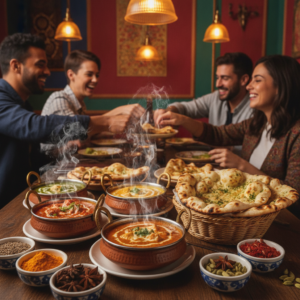
When families come into 7 Spice Bistro in Mississauga with children or relatives who are trying Indian food for the first time, we always recommend starting with a thali-style spread. It lets everyone find what they love — the child who only wants rice and dal, the adventurous aunt who keeps reaching for the pickle, the couple who ends up fighting over the last piece of roti. That table energy, that shared discovery, is exactly what we built this restaurant to create.
Searching for best Indian food near me should bring you to a place where someone is genuinely thinking about your experience — not just your order. A thali meal, done right, is proof that the kitchen has that intention baked in from the start. Every component was prepared, balanced, and arranged with the whole meal in mind. That level of thoughtfulness is rare, and it’s worth seeking out.
It’s also worth noting that a thali is inherently generous with its vegetarian offerings — much of the traditional thali repertoire is built around vegetables, legumes, and dairy. If you’re someone who gravitates toward plant-forward meals and finds yourself searching for a vegetarian restaurant near me, an authentic Indian thali is one of the most satisfying answers that search can produce. The variety and depth of flavour in a well-constructed vegetarian thali rivals any meat-centred meal.
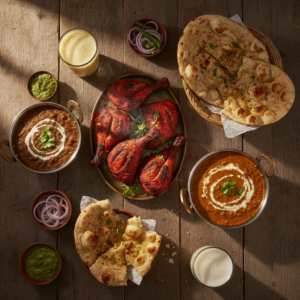
For those who want more than vegetables, a non-vegetarian thali can include a small portion of a meat or seafood preparation alongside the traditional components — a piece of tandoori chicken, a prawn curry, or a lamb dish that introduces the richness and depth of Indian meat cookery without overpowering the balance of the plate. At 7 Spice Bistro, our seafood and meat options are sourced fresh, keeping the quality of each thali component consistent across every plate we serve.
We also encourage you to explore our Dine-In Restaurants: 5 Signs a Place Is Worth Your Evening for a practical guide to knowing when a restaurant genuinely deserves your time — because not every place that shows up when you search for restaurants near me will give you the experience you’re actually looking for.
How Regional Thali Variations Shape What You Taste
No two regional thalis taste the same, and that variety is a reflection of India’s extraordinary geographic and cultural range. Understanding a few key regional styles helps you navigate an Indian menu with more confidence and more appetite.
North Indian thalis are perhaps the most familiar to diners in Mississauga and the Greater Toronto Area. They tend to be robust and warming — dal makhani, paneer dishes, naan or roti, and a rich curry. Ghee features prominently, and the spice profile leans toward warm aromatics like cardamom, clove, and cinnamon alongside the more aggressive heat of chilies.
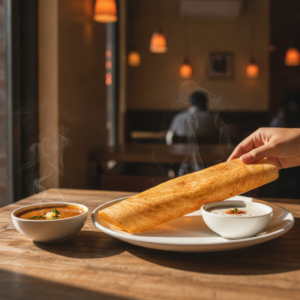
South Indian thalis, by contrast, are often brighter and more sour, with tamarind, coconut, and curry leaf playing central roles. The rice is the star here, with sambar and rasam served as dipping liquids alongside an array of coconut chutneys and crispy papadams. Many South Indian thalis are traditionally served on banana leaves — a practice that is both eco-friendly and flavour-enhancing, as the leaf imparts a subtle earthiness to the food.
Gujarati thalis are famous for their sweet undertone — even the dal and curries carry a whisper of sugar, balanced by the tang of tamarind. A Gujarati thali is often the most elaborate, with the greatest number of small dishes, and it reflects a culture that views hospitality and abundance as synonymous.
Rajasthani thalis come from a desert region where water was historically scarce, so the cooking relies heavily on preserved foods, dried legumes, and clarified butter. The flavours are bold and deeply satisfying — this is the thali that sticks with you for hours after you’ve left the table.
At 7 Spice Bistro in Mississauga, our menu draws primarily from North Indian traditions while incorporating techniques and flavour profiles from across the subcontinent. Our seven years of experience mean we’ve developed a kitchen sensibility that honours these regional roots while serving a GTA audience that is wonderfully diverse in its own right.
How to Make the Most of Your Thali Experience at an Indian Restaurant
Eating a thali well is a small art form, and learning a few simple principles transforms the meal from filling to genuinely memorable. Here’s how our team at 7 Spice Bistro recommends approaching it.
Start Slowly and Taste Everything First
Before you dive in, take a moment to look at what’s on your plate. Smell the steam rising from the dal. Notice the colour of the sabzi. A thali is meant to be experienced, not rushed. Take one small taste of each component on its own before you begin mixing and combining. This gives your palate a baseline understanding of each element before the flavours start to merge.
Mix and Combine Freely
The beauty of the thali is that there are no rules about what goes with what. Dal poured over rice is a classic comfort. Roti dipped into the sabzi is equally correct. A small smear of pickle alongside a bite of paneer creates an entirely new flavour. Follow your instincts and your taste buds — that’s exactly what the thali invites you to do.
Ask Your Server
Our team at 7 Spice Bistro genuinely enjoys talking about the food. If you’re curious about an ingredient, a preparation method, or why a particular dish pairs so well with another, please ask. These are conversations we love having. An informed guest is a happier guest, and understanding what you’re eating makes the experience richer in every sense. Good service at an Indian restaurant near me should always include that personal connection to the food.
Pace Yourself for the Sweet
It can be tempting to eat until the plate is empty before reaching the dessert component, but try to save a little appetite for the sweet ending. The kheer or the gulab jamun that closes the thali is not an afterthought — it is the resolution of a culinary story. Eating it when you are completely full means missing its full effect. A few bites of the sweet finish, eaten slowly and deliberately, complete the experience in the way the kitchen intended.
If you’re planning a larger gathering or want to bring the thali experience to a private event, our full-service catering team can help. Read more about how to plan it right in our guide to Indian Catering Services: 6 Questions to Ask Before You Book — it covers everything from menu planning to serving logistics so your event runs smoothly and deliciously.
Ready to Experience a Real Indian Thali?
Come visit us at 7 Spice Bistro in Mississauga and let our team take you on a full-plate journey through authentic Indian cuisine. Whether it’s your first time exploring Indian food or you’re a seasoned lover of dal and roti, our kitchen is ready for you. Dine in for a warm, welcoming experience — or ask us about our catering packages for your next celebration.
✍️ Written by the 7 Spice Bistro Team — We are a Mississauga-based Indian and Hakka cuisine restaurant with seven years of experience bringing authentic, home-style Indian cooking to families, couples, and professionals across the Greater Toronto Area. Our kitchen runs on age-old recipes, fresh local ingredients, and a genuine love of feeding people well.
Frequently Asked Questions
What is included in a traditional Indian thali?
A traditional Indian thali typically includes dal (lentil dish), sabzi (vegetable preparation), rice, roti or bread, chutney, pickle, papad, and a small sweet dish. The exact components vary by region — a North Indian thali will look and taste quite different from a South Indian or Gujarati thali — but the principle of a balanced, all-in-one meal remains consistent across every style.
How do I know which Indian restaurant near me serves an authentic thali?
Look for restaurants that use fresh ingredients, prepare dal and sabzi in-house, and serve bread that is made to order rather than reheated. An authentic thali should feel generous and balanced — not just large, but thoughtfully composed. At 7 Spice Bistro in Mississauga, our approach combines age-old recipes with locally-sourced produce, and our seven years of experience mean every plate reflects genuine culinary intention rather than assembly-line shortcuts.
Why is the thali considered a complete meal in Indian culture?
The thali is considered complete because it is designed to satisfy all six Ayurvedic tastes — sweet, sour, salty, spicy, bitter, and astringent — in one sitting. Each component contributes a nutritional function as well as a flavour role: protein from the dal, carbohydrates from rice and bread, vitamins from vegetables, and probiotics from fermented pickles. Together, they create a meal that is balanced in ways that go far beyond simply filling you up.
Can I order a thali-style spread for a catered event or private party?
Yes — and it is one of the most crowd-pleasing formats for any large gathering. A thali-style catering setup allows guests of every preference to eat well from the same spread, which makes it ideal for weddings, corporate events, family celebrations, and milestone dinners. At 7 Spice Bistro, our catering team offers personalized packages that can be designed around a thali-inspired menu. For everything you need to know before booking, visit our guide on Dinner Catering for Your Next Event: How to Get the Food Right Every Time.