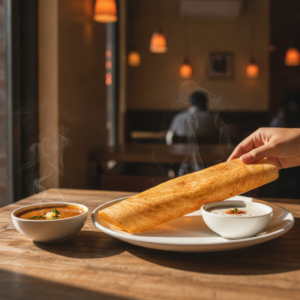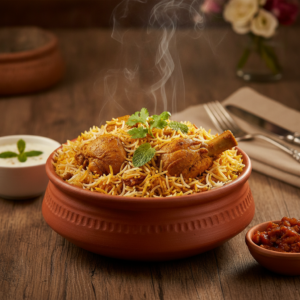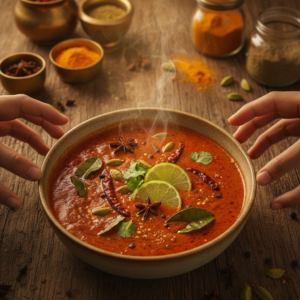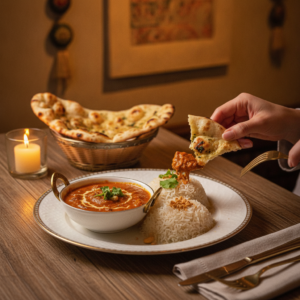
If you’ve ever typed “spicy food near me” into your phone only to freeze at the menu because you weren’t sure whether to order a korma or a vindaloo, you are absolutely not alone — and in 2026, that moment of menu-panic is more common than ever as Indian cuisine continues to win over diners right across the Greater Toronto Area. At 7 Spice Bistro in Mississauga, Ontario, we’ve spent seven years watching guests stare at our menu with a mix of excitement and mild terror, and we think it’s time to fix that for good. This guide breaks down Indian spice levels clearly, honestly, and practically — so the next time you sit down with us, you order exactly what your palate is ready for, and you leave the table genuinely happy.
⚡ QUICK ANSWER
Indian restaurant spice levels typically run from mild (korma, butter chicken) through medium (tikka masala, dal makhani) to hot (rogan josh, kadai) and fiery (vindaloo, phaal). Most dishes can be adjusted at the kitchen’s discretion — always ask your server. At 7 Spice Bistro in Mississauga, our team is happy to calibrate heat to your comfort level without compromising the dish’s authentic character.
What Actually Makes Indian Food Spicy — and Why It’s More Than Just Chilli
Heat in Indian cooking comes from multiple sources, not just one ingredient — and understanding that distinction changes everything about how you order. The burn you feel in a vindaloo is fundamentally different from the warm, lingering tingle in a masala, and both are different again from the aromatic heat of a black peppercorn-forward Chettinad dish.
The primary heat agents in Indian cuisine fall into three categories. Capsaicin-based heat comes from fresh green chillies, dried red chillies, and chilli powder — this is the sharp, immediate burn most people picture. Piperine-based heat comes from black pepper, which creates a slower, deeper warmth at the back of the throat. Aromatic heat comes from spices like ginger, cloves, and long pepper, which produce a sensation of warmth rather than burning fire.
At 7 Spice Bistro, our kitchen uses all three layers in different proportions depending on the regional origin of each dish. A Goan-style preparation leans heavily on red chilli and vinegar. A North Indian curry relies more on whole spices and aromatics. Understanding this means you won’t be caught off guard — and it means “medium spicy” at one restaurant can mean something entirely different at another.
The Role of Fat, Dairy, and Acid in Managing Heat
Capsaicin is fat-soluble, not water-soluble — which is why a glass of water does nothing to cool down your mouth, but a spoonful of yogurt raita or a sip of mango lassi works almost immediately. Dishes with cream, ghee, or coconut milk naturally temper chilli heat, which is why butter chicken feels mild despite containing chilli powder. When you’re ordering, cream-based and coconut-based curries are your built-in heat buffers. Tomato-based and dry preparations tend to carry heat more intensely and directly.
“Spice is not about endurance — it’s about balance. The best Indian dishes are built so that every element of heat is accompanied by something that makes the whole dish taste complete.” — 7 Spice Bistro Kitchen Team
How Do Indian Spice Levels Actually Break Down? A Practical Dish-by-Dish Guide
Indian spice levels exist on a genuine spectrum — not just a simple one-to-five scale — and the most useful way to understand them is through specific dishes. Once you can place a dish on the heat map, you can always use it as a reference point when trying something new.
| Heat Level | Common Dishes | What to Expect | Best Paired With |
|---|---|---|---|
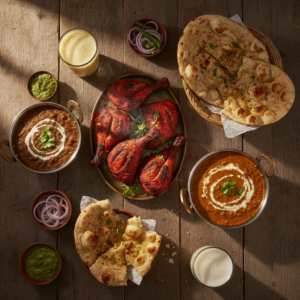
| Mild | Korma, Butter Chicken, Palak Paneer | Aromatic warmth only; no heat sensation on the palate | Garlic naan, basmati rice |
| Medium-Mild | Tikka Masala, Dal Makhani, Saag | Gentle warmth, slight tingle at the finish | Mango lassi, plain rice |
| Medium | Rogan Josh, Chicken Curry, Chana Masala | Noticeable heat; builds through the meal | Raita, papadum |
| Hot | Kadai, Lamb Karahi, Chicken 65 | Strong, sustained heat; sweat-inducing for most diners | Lassi, thick paratha |
| Fiery | Vindaloo, Phaal, Naga-based preparations | Intense, immediate, and prolonged burn — for experienced palates only | Full-fat yogurt, plain bread |
One important note: these are generalizations based on traditional preparations. Every kitchen calibrates differently, and at 7 Spice Bistro in Mississauga, we treat spice as a conversation — not a fixed formula. Tell us where you are on this chart, and we’ll cook to match.
Why Does the Same Dish Taste Different at Every Indian Restaurant?
The same dish can taste dramatically different between restaurants because Indian cooking has no single “correct” recipe — regional traditions, family methods, and individual chef interpretations all shape every plate. A chicken tikka masala in Mississauga, Ontario may share a name with one in downtown Toronto, but the spice ratios, tomato base, and cream levels can be worlds apart.
Several variables drive this variation. Regional origin matters most: Punjabi cuisine uses more cream and butter; Goan cuisine uses more chilli and vinegar; South Indian cooking relies heavily on mustard seeds, curry leaves, and coconut. Spice freshness is equally critical. Whole spices that are toasted and ground fresh produce a completely different flavour profile than pre-ground powder that’s been sitting in a jar for six months. This is why we grind many of our spice blends in-house — it’s one of those details you can taste immediately.
If you’re searching for indian food near me and trying to find a kitchen that genuinely cares about these distinctions, look for restaurants that mention fresh ingredients, house-made spice blends, or regional specialties on their menu. These are signals of a kitchen that treats cooking as a craft, not a production line.
How Ingredient Quality Changes the Spice Experience
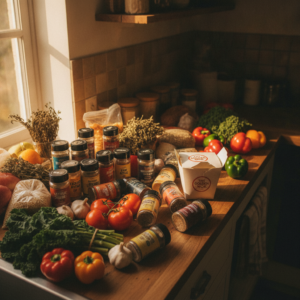
Fresh, locally sourced produce and proteins change the way spices interact with a dish. A tomato that actually tastes like a tomato provides natural acidity that balances chilli heat. Fresh ginger and garlic have volatile compounds that amplify aromatic warmth in a way that jarred paste simply can’t replicate. At 7 Spice Bistro, we’ve built our relationships with local suppliers specifically because fresher ingredients make every spice work harder and more harmoniously — which means our dishes don’t need to rely on excessive chilli to taste bold.
For families, couples, and professionals in the GTA looking for what genuinely qualifies as best indian food near me, ingredient sourcing is one of the clearest differentiators between a kitchen that’s invested in quality and one that isn’t. It’s worth asking. Our team is always happy to talk about what’s on the plate and where it came from.
You might also find our guide to Dine-In Restaurants: 5 Signs a Place Is Worth Your Evening helpful when evaluating any restaurant — Indian or otherwise — before you commit to a booking.
How to Order Confidently at an Indian Restaurant — Even If It’s Your First Time
Ordering well at an Indian restaurant is a skill, and it takes about two visits to develop — here’s how to shortcut that learning curve. The key principle is to anchor your order around one dish you’re confident about, then explore from there.
Start with your heat anchor. Pick the dish on the table above that matches where you think your tolerance sits, and order that as your main. This gives you a reliable reference point. If it’s too mild, you know to go one level up next time. If it’s already pushing your limit, you know exactly where your ceiling is.
Tell your server your experience level honestly. This is not the time for bravado. A good server — and our team at 7 Spice Bistro is trained for exactly this — will use that information to steer you toward something you’ll genuinely love, not just survive. There’s no glory in ordering vindaloo if your palate is a korma palate. The goal is a great meal, full stop.
Order a heat buffer alongside any unfamiliar dish. Raita — the cool yogurt and cucumber condiment — is your best friend at any Indian table. So is a mango lassi. Both are designed specifically to reset your palate between bites and cool capsaicin heat quickly. Never skip the raita if you’re trying something new.
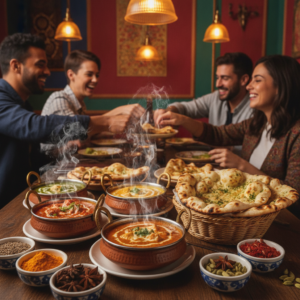
Share dishes across the table. Indian food is traditionally served family-style for a reason — it lets everyone taste across the spectrum. When dining with family or friends at 7 Spice Bistro, we recommend ordering two or three dishes at different heat levels and sharing them alongside a rice or bread. This way, everyone gets the experience they’re after, and the milder dishes provide natural relief between bites of spicier ones.
Navigating Seafood and Hakka Dishes on the Heat Scale
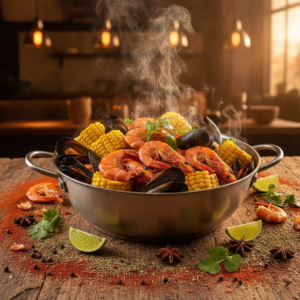
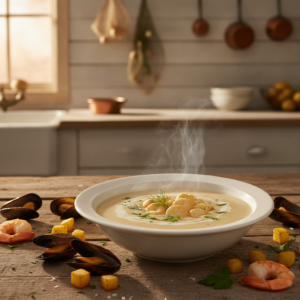
Our menu at 7 Spice Bistro extends beyond traditional North Indian curries into fresh seafood preparations and Hakka Indo-Chinese dishes — and both have their own heat logic. Seafood dishes in Indian cooking, particularly Goan-style preparations, tend to run hotter than land-protein curries because the bold chilli base is traditionally used to complement the natural sweetness of fish and prawns. If you’re a seafood lover trying Indian preparations for the first time, start medium and adjust up.
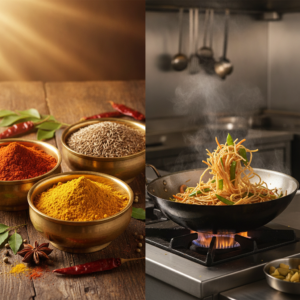
Hakka dishes — our Indo-Chinese specialties — operate on a different heat logic entirely. Hakka chilli preparations use a combination of soy, vinegar, and fresh green chillies to produce a sharp, vinegary heat that hits fast and fades quickly. It’s a different sensation from the sustained warmth of a curry, and many diners who find curries overwhelming actually handle Hakka heat very well. If you’ve been searching for good food near me that offers genuine variety in both flavour profiles and heat experiences, that’s exactly the range we’re built to deliver.
Where to Find Authentic Indian Cuisine in Mississauga — What to Look For
Mississauga, Ontario has a thriving South Asian food community, which means diners have genuine choices — but not all those choices are equal. When you’re evaluating an indian restaurant near me, there are a few markers of authenticity that separate a kitchen genuinely cooking Indian food from one that’s serving a diluted approximation of it.
Regional specificity on the menu is the clearest signal. A restaurant that labels dishes by regional origin — Punjabi, Goan, Chettinad, Hyderabadi — is a kitchen that understands the cuisine well enough to distinguish between its sub-traditions. Generic “Indian curry” labelling with no context is often a sign that the kitchen is cooking to a simplified Western expectation rather than a regional tradition.
Spice transparency matters too. A kitchen confident in its cooking is happy to discuss what’s in a dish and how it was made. At 7 Spice Bistro in Mississauga, we encourage questions — about ingredients, spice levels, preparation methods. A restaurant that deflects those conversations is often one that doesn’t have satisfying answers.
The bread and rice programme tells you a great deal. Freshly made naan, roti, and paratha baked to order in a tandoor or on a tawa take time and skill. Pre-made or reheated bread is a shortcut that compromises the whole meal. Watch for that detail — it’s a reliable indicator of overall kitchen standards.
Our sister guide — Indian Restaurants in Milton: What Nearby Diners Should Know — covers how to evaluate your options across the broader western GTA area if you’re exploring beyond Mississauga. And if you’re planning to host an event with Indian catering, our detailed breakdown at Indian Catering Services: 6 Questions to Ask Before You Book covers exactly what to ask before you sign anything.
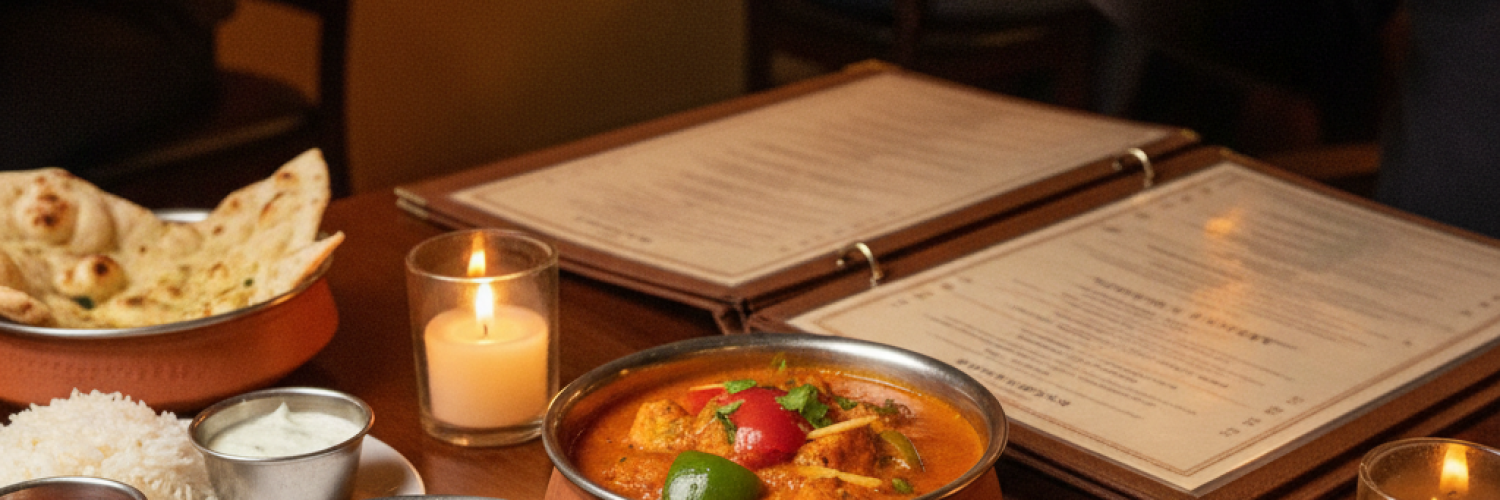
7 Spice Bistro is located in the Meadowvale area of Mississauga, Ontario — a warm, family-friendly space that’s equally suited to a quiet weeknight dinner for two, a family gathering with grandparents and kids, or a celebratory meal among colleagues. We’ve been part of this community for seven years, and that experience shows up on every plate we serve.
Ready to Put This Guide to the Test?
Whether you’re a mild-only diner building your confidence or a heat-seeker looking for your next challenge, our team at 7 Spice Bistro in Mississauga is here to make sure you order exactly the right dish — and love every bite. Come in for dine-in, explore our full menu, or talk to us about catering your next event. We’d love to cook for you.
✍️ Written by the 7 Spice Bistro Team
We’re the kitchen and front-of-house crew behind Mississauga’s favourite Indian and Hakka dining destination on Meadowvale. After seven years of cooking, serving, and sharing authentic Indian cuisine with families, couples, and professionals across the GTA, we write from the plate outward — practical knowledge earned one dish at a time.
Frequently Asked Questions
How do I tell a waiter I want my Indian food less spicy without ruining the dish?
Simply tell your server your preferred heat level using a reference dish — for example, “I’d like something around butter chicken spice level” or “I want flavour without any real burn.” A well-trained server will relay that to the kitchen as a specific instruction, not a vague request. At 7 Spice Bistro, we adjust chilli quantities at the kitchen’s discretion while preserving the aromatics and depth of the dish — so you get a less fiery version that still tastes genuinely Indian, not a watered-down approximation.
What is the mildest Indian dish I can order if I have a low spice tolerance?
Korma is the most reliably mild dish across virtually every Indian restaurant — it’s a cream and nut-based curry with almost no chilli heat, built instead on aromatic spices like cardamom, cinnamon, and cloves. Butter chicken is the next closest option and slightly more widely loved for its rich tomato-cream sauce. Both are excellent entry points for first-time diners or anyone with genuine chilli sensitivity, and both pair beautifully with garlic naan and a mild dal on the side.
Why does Indian food make me feel hot even when I ordered mild?
Aromatic spices like ginger, black pepper, cloves, and cinnamon trigger thermoreceptors in your mouth and digestive system — producing a sensation of internal warmth that has nothing to do with capsaicin heat. This is normal and is actually one of the therapeutic properties of Indian spice traditions. Even a genuinely mild korma will make you feel warmer than a plain piece of chicken, because the whole-spice profile is doing exactly what it’s designed to do. It’s not heat — it’s depth.
Can I request a custom spice level for a catering order at 7 Spice Bistro?
Absolutely — and for catering and event bookings, this is one of the most common and most important customizations we handle. When you’re feeding a group that includes children, elderly guests, and adventurous adults all at once, having dishes calibrated across heat levels ensures everyone is comfortable and satisfied. Our catering team works with you in the planning stage to build a menu that accounts for your full guest profile. If you’re planning a wedding, corporate event, or family celebration in the Mississauga, Ontario area, reach out to us early — personalized spice planning is part of every catering package we offer.