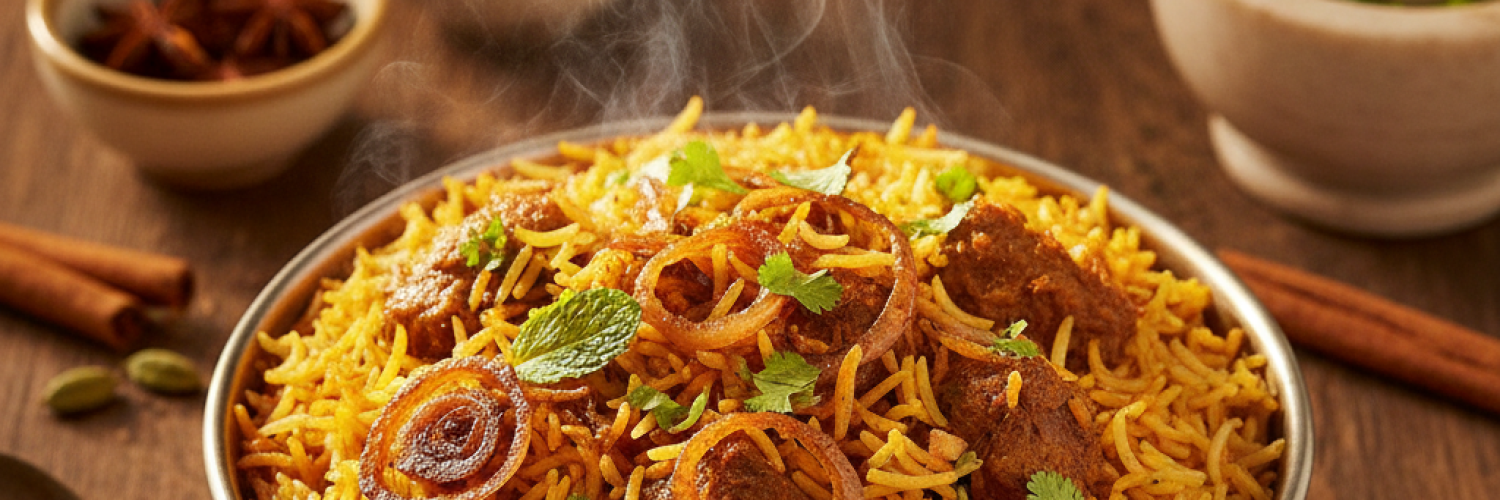
What Is Biryani, Really? (And Why Most People Have Never Had a Truly Great One)
If you’ve been searching for the best biryani in Mississauga, you already know that not all biryani is created equal — and that the difference between a forgettable plate and a genuinely memorable one comes down to things most menus will never explain to you. In 2026, the GTA’s food scene is more diverse and competitive than it has ever been, yet great biryani remains surprisingly hard to find. We’re here to change that.
At 7 Spice Bistro, we’ve spent seven years crafting biryani the way it was meant to be made — with fresh, locally-sourced ingredients, age-old recipes, and the kind of patience that a truly layered rice dish demands. This guide is our honest, insider answer to everything a curious diner should know before ordering their next plate.
⚡ QUICK ANSWER
A great biryani is defined by three things: the quality of its rice, the depth of its spice layering, and the dum cooking method that seals everything together under slow, even heat. Regional style matters too — Hyderabadi, Lucknowi, and Kolkata biryanis each taste and cook differently. If you’re looking for authentic biryani near you in Mississauga, Ontario, the key is finding a kitchen that respects these fundamentals rather than cutting corners for speed.
What Separates a Great Biryani from an Average One?
A great biryani is not simply spiced rice with protein — it is an architectural dish where every layer has a purpose. The separation between an exceptional biryani and a forgettable one comes down to four foundational elements: rice selection, spice balance, protein preparation, and the cooking method used to bring it all together.
1. The Rice: Long-Grain, Aged, and Properly Parboiled
Basmati rice is the non-negotiable foundation of any authentic biryani. What many home cooks and shortcut restaurants miss is that the rice must be aged — older basmati has lower moisture content, which means the grains cook up long, separate, and fluffy rather than sticky and clumped. The rice should be parboiled to roughly 70% doneness before it ever meets the pot, so it finishes cooking slowly inside the sealed vessel without becoming mushy. Every grain in a well-made biryani should stand independently.
2. The Spice Layering: Complexity Over Heat
A common misconception is that biryani is about spice heat. It isn’t — it’s about spice complexity. Whole spices like star anise, green cardamom, mace, and bay leaves are bloomed in ghee first. The protein is marinated separately, often overnight, in a yogurt-based masala. The caramelised onions — called birista — are fried low and slow until they are deep amber and sweet. Each of these elements brings a different aromatic layer. The final dish should have warmth, fragrance, and depth that reveals itself across the entire eating experience, not just the first bite.
3. The Dum Method: Why Sealing the Pot Is Everything
Dum pukht — meaning “breathe and cook” in Persian — is the slow-steam technique that defines authentic biryani. The pot is sealed with dough or a tight lid and placed over a gentle flame. Inside, the steam from the marinated meat and the half-cooked rice circulate and infuse one another. No moisture escapes, so every aroma and flavour compound stays locked inside the vessel. This process takes time. It cannot be rushed. Restaurants that skip dum and simply toss marinated protein into pre-cooked rice produce something that might taste decent but will never reach the level of the real thing.
“The pot is sealed, the flame is low, and the dish is left alone to become what it’s meant to be. That patience is the secret ingredient no recipe can fully capture.”
— The Kitchen Team at 7 Spice Bistro
How Do Regional Biryani Styles Differ From Each Other?
Regional biryani styles differ primarily in their cooking method, spice profile, and whether the meat is cooked raw inside the rice or pre-cooked before layering. Understanding these differences helps you know exactly what you’re ordering — and what to expect on the plate.
| Style | Region of Origin | Cooking Method | Flavour Profile |
|---|---|---|---|
| Hyderabadi | Hyderabad, Telangana | Kacchi (raw meat + rice cooked together under dum) | Bold, spicy, deeply aromatic with saffron and mint |
| Lucknowi (Awadhi) | Lucknow, Uttar Pradesh | Pakki (meat pre-cooked, then layered with rice) | Subtle, floral, lighter with rose water and kewra |
| Kolkata | Kolkata, West Bengal | Pakki with potato addition, slow dum finish | Milder, sweet-savoury, with distinct boiled egg and aloo |
| Malabar / Kerala | Kerala, South India | Pakki with short-grain kaima rice, coconut influence | Coastal, rich with coconut, cashew, and raisins |
| Sindhi | Sindh region | Kacchi with strong whole spice emphasis | Robust, oily, intensely spiced with tomato base |
Understanding these regional distinctions transforms how you order and appreciate biryani. When you visit a quality Indian restaurant in Mississauga, don’t be afraid to ask your server which style of biryani is on the menu. A kitchen that can answer that question with confidence is a kitchen that takes its craft seriously.
Why Do Ingredients Matter So Much in Biryani?
Ingredient quality in biryani is amplified by the cooking method itself — because the sealed dum process concentrates every flavour, there is nowhere for a subpar ingredient to hide. Fresh, high-quality components make a measurable difference in the final plate.
Saffron: The Non-Negotiable Luxury
Real saffron — the dried stigmas of the Crocus sativus flower — gives biryani its signature golden hue and a delicate, honey-like fragrance that no artificial colouring can replicate. It is steeped in warm milk and drizzled over the top layer of rice before sealing. Restaurants using food dye instead of genuine saffron produce a visually similar dish that tastes entirely flat in comparison. It’s one of the easiest ways to tell a shortcut kitchen from a serious one.
Ghee vs. Oil: A Fat That Flavours
Traditional biryani is finished with a generous pour of pure ghee — clarified butter that has been simmered until the milk solids have caramelised and been removed. Ghee has a higher smoke point than regular butter, a nutty, rich flavour, and a characteristic aroma that carries the whole spice fragrances through the rice. Substituting it with neutral cooking oil saves cost but strips the dish of one of its most recognisable aromatic signatures.
The Protein: Marination Is Not Optional
Whether it is chicken, lamb, or seafood, the protein in a biryani must be marinated — ideally for a minimum of several hours, preferably overnight. A yogurt-based marinade tenderises the meat while the spices penetrate deep into the muscle fibres. Protein that has been marinated properly will be juicy, flavourful all the way through, and will release its own spiced liquid into the rice during dum cooking. Protein that has been added without adequate marination will taste bland at its core, regardless of how spiced the rice around it might be.
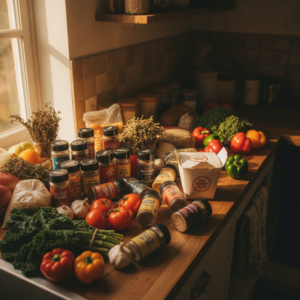
At our kitchen in Mississauga, Ontario, we use fresh, locally-sourced ingredients across our entire menu — including the proteins and aromatics that go into our biryani. We believe that the quality of what goes in is the single greatest predictor of what comes out.
Where to Find the Best Biryani in Mississauga
The best biryani in Mississauga comes from a kitchen that combines authentic technique, quality ingredients, and genuine culinary heritage — not from a restaurant that treats biryani as a side note on an oversized menu. Mississauga’s food scene has grown enormously in recent years, and there are more options than ever for families, couples, and professionals across the GTA looking for real Indian food near them.
Here is what we recommend looking for when you’re evaluating biryani options anywhere in the GTA:
- Ask about the cooking method. A confident kitchen will tell you exactly how their biryani is made. If the answer is vague, that says something.
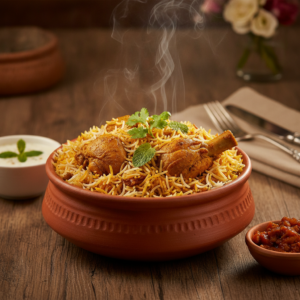
- Look at the rice. Grains should be long, separate, and lightly golden where the saffron has reached them. Clumped or uniformly yellow rice is a sign of shortcuts.
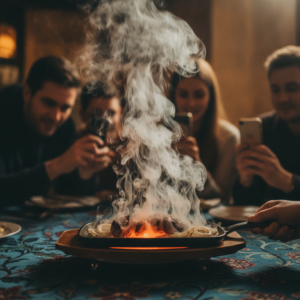
- Notice the aroma. Real biryani announces itself when it arrives at the table. If the fragrance doesn’t reach you before the plate does, the dum process was likely skipped.
- Check the protein. It should be tender all the way through, not just on the surface. Properly marinated meat is juicy and flavourful at the centre.
- Consider the accompaniments. Traditional biryani is served with raita and a salan (thin curry). A restaurant that includes these without being asked understands the dish as a complete eating experience.
When people in the GTA search for Indian food near me, restaurants near me, or specifically biryani near me, what they are really looking for is consistency, authenticity, and a kitchen that cares. That is what we have built at About Us — a seven-year story rooted in the belief that premium Indian dining should never require a premium price tag.
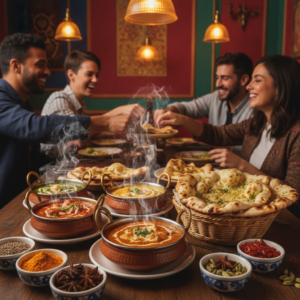
We are proud to serve as one of Mississauga’s go-to destinations for mississauga food that genuinely reflects the depth and diversity of Indian and Hakka culinary traditions. Our dine-in experience is designed to feel like a meal at a friend’s table — warm, unpretentious, and completely satisfying. And for those planning larger gatherings, our full-service catering and wedding packages bring the same kitchen standards to your event, wherever in the GTA it may be.
Whether you’re a longtime fan of Hyderabadi-style biryani, curious about the differences between regional preparations, or simply searching for the best Indian restaurant in Mississauga to bring your family on a Friday evening — we’d love to be your answer.
“Biryani is not fast food. It is considered food — where every decision made in the kitchen, from spice selection to the moment the seal is broken at the table, reflects the cook’s respect for the dish and the diner.”
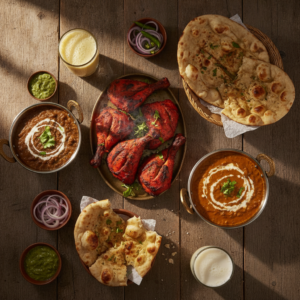
We also invite guests who are discovering Indian cuisine for the first time to explore our menu beyond biryani. Our Hakka offerings — Indo-Chinese dishes that are becoming increasingly sought after by those searching for hakka near me or hakka food near me — sit alongside our traditional Indian dishes and fresh seafood preparations to create a menu that has something genuinely exciting for every kind of diner. Mississauga, Ontario is lucky to have a growing appreciation for this cuisine, and we’re glad to be part of that story.
If you’ve been using searches like indian restaurant near me, food near me, or vegetarian restaurant near me trying to find a place that meets your standards, we encourage you to come in and let the food do the talking. Visit 7 Spice Bistro to view our full menu, explore our catering options, and find out how to reach us.
Ready to Experience Real Biryani?
Join us at 7 Spice Bistro in Mississauga, Ontario, for a dine-in experience built on seven years of authentic Indian and Hakka cuisine, fresh locally-sourced ingredients, and warm hospitality. Whether it’s a family dinner, a date night, or a special celebration — your table is waiting.
✍️ Written by the Team at 7 Spice Bistro
The culinary and content team at 7 Spice Bistro brings over seven years of hands-on experience preparing authentic Indian and Hakka cuisine in Mississauga, Ontario. We write from the kitchen outward — sharing the techniques, traditions, and ingredient knowledge that shape every dish we serve.
Frequently Asked Questions
What is the difference between Hyderabadi and Lucknowi biryani?
Hyderabadi biryani uses the kacchi method, where raw marinated meat and parboiled rice are layered together and cooked simultaneously under sealed dum. Lucknowi (Awadhi) biryani uses the pakki method, where the meat is fully pre-cooked before being layered with the rice. The result is that Hyderabadi biryani tends to be bolder and more robustly spiced, while Lucknowi biryani is subtler, more floral, and lighter on the palate.
How can I tell if a restaurant is making authentic biryani or a shortcut version?
The clearest indicators are the rice texture, the aroma, and the protein quality. Authentic biryani has long, separate, fragrant grains with a natural saffron golden tone; shortcut versions often have clumped, uniformly dyed rice with little fragrance. Ask whether the biryani is made to order or pre-cooked and held in batches — a kitchen confident in its dum process will always be transparent about this.
Why does biryani taste different at every Indian restaurant in Mississauga?
Biryani is a highly personal dish — each kitchen uses its own spice blend (called a masala), its own marination time, its own rice-to-protein ratio, and its own version of the dum process. Regional origin, family tradition, and the sourcing of ingredients all produce different results. This is part of what makes biryani so fascinating: no two kitchens will ever make exactly the same dish, and the best version is always the one made by a team that has refined their recipe over years of practice.
Can I order biryani as part of a catering package for a large event?
Yes — at 7 Spice Bistro, our full-service catering packages are available for weddings, family celebrations, corporate events, and large gatherings across Mississauga and the Greater Toronto Area. Biryani is one of the most popular centrepiece dishes for large events, and our team prepares it with the same care and technique we bring to every dine-in plate. Contact us through 7 Spice Bistro to discuss a personalised catering menu for your event.