The Search for “All You Can Eat Near Me” Is Easy — Finding One That’s Actually Worth It Isn’t
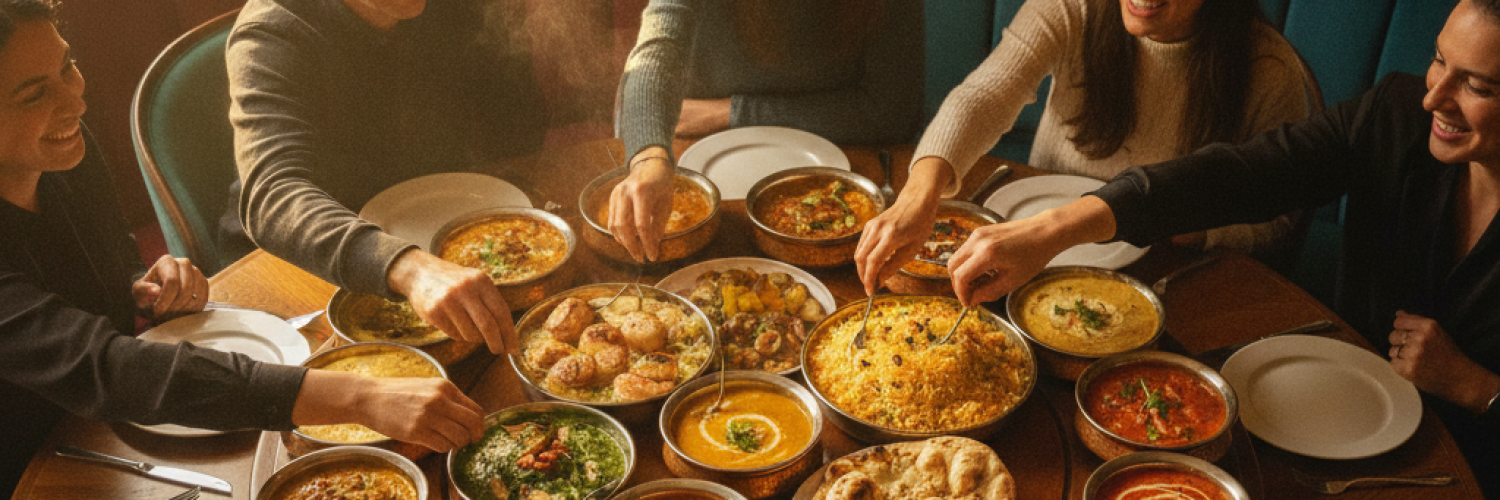
Typing “all you can eat near me” into Google in 2026 returns dozens of options in and around Mississauga within seconds. The harder part? Figuring out which ones are actually worth your evening, your appetite, and your money. Too many buffets compete on quantity alone — mountains of food kept warm under heat lamps for hours, dishes that taste identical despite different names on the label, and spice blends that are more suggestion than substance. If you’ve walked out of one of those feeling full but vaguely disappointed, you already know exactly what we mean.
At 7 Spice Bistro, we’ve spent over seven years serving authentic Indian and Hakka cuisines to families, couples, and professionals across the Greater Toronto Area. We hear the same frustrations week after week from guests who tried another spot first. So we put together this honest, practical guide — not to sell you on a buffet, but to help you evaluate any all-you-can-eat Indian experience like someone who actually knows what great Indian food looks, smells, and tastes like.
⚡ QUICK ANSWER
A great all-you-can-eat Indian buffet earns its price through freshness of ingredients, authentic spice depth, frequent dish rotation, and variety across regions and dietary styles — not just volume. Look beyond the price tag: inspect how dishes are maintained, ask how often trays are refreshed, and trust your nose. Freshly prepared Indian food smells unmistakably alive.
What Does “Authentic” Actually Mean for an Indian Buffet?
Authenticity in Indian cuisine means the food reflects real regional traditions, not a watered-down, one-size-fits-all version designed to offend no one. The term gets thrown around a lot in marketing — but it has concrete, identifiable markers you can spot before you even take a bite.
Regional variety is your first clue. India is a subcontinent with dozens of distinct culinary traditions. A buffet that lumps everything under “curry” and calls it done is already cutting corners. Look for dishes that signal regional identity: a proper dal makhani that has been slow-cooked for hours, a chettinad-style preparation with its characteristic kalpasi and marathi mokku spices, or a saag paneer with real mustard greens rather than spinach alone. These details are the fingerprints of a kitchen that knows what it’s doing.
Spice blends are non-negotiable. Authentic Indian cooking builds flavour in layers — whole spices bloomed in oil first, aromatics added next, then ground spice blends, then wet ingredients. That layering creates a depth that pre-made spice pastes simply cannot replicate. When you taste a dish and the flavour evolves across your palate — earthy upfront, warm in the middle, bright at the finish — that’s a kitchen using real technique. Flat, one-note flavour means shortcuts.
Fresh ingredients over frozen shortcuts. At 7 Spice Bistro, we source locally whenever possible, combining fresh ingredients with age-old recipes that our team has refined over years of practice. The difference shows up on your plate: brighter sauces, firmer vegetables, and proteins that haven’t been masked by heavy seasoning to hide their age. When you’re evaluating a buffet, look at the vegetable dishes especially — overcooked, mushy vegetables are almost always a sign of bulk preparation done too far in advance.
How Do You Know If the Food Is Actually Fresh?
Freshness at a buffet isn’t just about when the food was made — it’s about how it’s been maintained since it left the kitchen. These are the practical signs to look for the moment you walk in.
Use Your Nose First
Freshly prepared Indian food has a warm, complex aroma that fills a room — toasted cumin, simmering tomatoes, caramelized onion, warm ghee. If the buffet area smells more like old grease than spice, or if there’s a slightly sour or flat quality to the air, that’s information. A kitchen actively cooking smells like it. A kitchen that prepared everything at 10am and is coasting through dinner service does not.
Watch the Tray Rotation
Don’t be shy about asking the staff how often dishes are refreshed. A restaurant that’s confident in its kitchen will answer without hesitation. A good benchmark: popular dishes at a busy buffet should be refreshed every 30 to 45 minutes. If you’re arriving at peak dinner hours and trays look half-empty with crusted edges, those aren’t being replenished — they’re being stretched. Sauce congealing around the rim of a chafing dish is one of the most reliable visual signals that a dish has been sitting too long.
Bread and Rice Are a Dead Giveaway
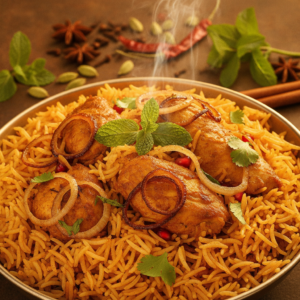
Naan and roti that have been sitting under a lamp for an hour become dry, brittle, and slightly leathery. Fresh Indian bread is soft, slightly chewy at the edges, with the faint char of a tandoor or tawa still present. Similarly, fresh basmati rice should be separate-grained and aromatic — clumped, sticky rice has likely been steamed too far in advance and held improperly. These two staples are easy to overlook in favour of the main dishes, but they tell you a lot about the kitchen’s overall standards.
“The test of a great Indian buffet isn’t the dish that impresses you most — it’s the simplest dish on the table. If the dal is well-seasoned, balanced, and fresh, the kitchen cares about everything.”
Why Does Dish Variety Matter More Than Dish Count?
Variety means the dishes genuinely differ from one another — in base flavour, regional origin, cooking technique, and protein or vegetable combination. Count alone is meaningless if fifteen dishes all taste like variations of the same masala base.
A well-constructed Indian buffet should take you across a range of flavour profiles: something tangy and bright (like a tamarind-forward dish), something rich and creamy (a well-made makhani), something dry-roasted and earthy (a bhuna-style preparation), and something fresh and cooling (raita, or a kachumber salad). If every dish pulls in the same direction, the menu hasn’t been thought through — it’s been expanded to fill trays.
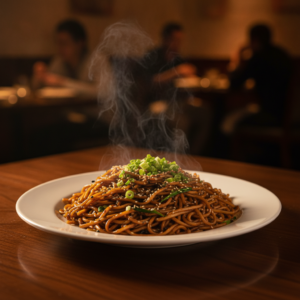
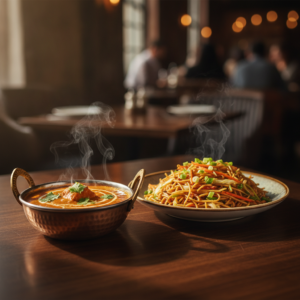
This is also where Hakka cuisine adds something genuinely exciting to a menu. Indo-Chinese Hakka food — the style perfected in the Indian-Chinese communities of Kolkata and now beloved across the GTA — brings an entirely different flavour vocabulary to the table. Wok-tossed preparation, soy and chili-forward sauces, and a lighter texture that contrasts beautifully with the richness of Indian curries. If you’re searching for the best Hakka near me alongside Indian options, a restaurant that does both well gives you a range that a single-cuisine buffet simply can’t match.
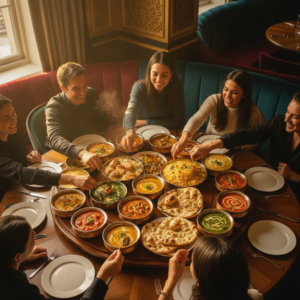
At 7 Spice Bistro in Mississauga, our menu reflects exactly this kind of intentional variety — Indian and Hakka preparations that complement rather than duplicate each other, giving diners a genuinely diverse experience under one roof. Learn more about what to look for in a sit-down experience with our guide to Dine-In Restaurants: 5 Signs a Place Is Worth Your Evening.
What Role Does Seafood Play in a Quality Indian Spread?
Seafood is one of the clearest quality tests on an Indian buffet — it’s also one of the most commonly done poorly. Done right, it signals a confident kitchen with good sourcing relationships. Done wrong, it’s the dish that ruins the meal.
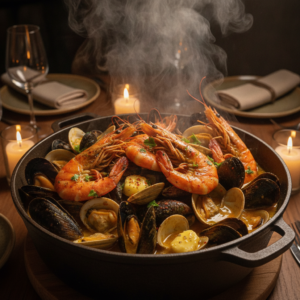
Indian coastal cuisine — particularly from Goa, Kerala, and Bengal — has some of the most sophisticated seafood preparations in the world. A Goan fish curry built on coconut milk and kokum has a complexity that takes time and care to achieve. Prawn masala done correctly should have firm, properly cooked prawns with a sauce that’s been reduced to concentrate the spice rather than dilute it. If the seafood dish looks like an afterthought — overcooked proteins in a thin, watery sauce — it was.
Freshness in seafood is non-negotiable. Seafood that isn’t fresh doesn’t just taste off — it smells off, and that smell doesn’t hide in Indian spice the way some restaurants hope it will. When a restaurant is confident in its seafood sourcing, the dish will be front and centre, not hidden at the end of the buffet line. At 7 Spice Bistro, seafood is a genuine part of our offering because we treat sourcing as a priority, not an afterthought.
Is “Best Indian Food Near Me” Always About the Buffet Format?
Not necessarily — and this is worth being honest about. Searching for the best Indian food near me doesn’t have to lead you to a buffet. For many dishes, especially slow-cooked preparations, proteins marinated and cooked to order, or anything that benefits from immediate plating, à la carte service will always produce a better result. The buffet format, by design, requires food to hold — and some Indian dishes hold better than others.
The dishes that hold well in a buffet: thick, oil-based curries, lentil dishes like dal, rice-based preparations, and many Hakka noodle and fried rice dishes that maintain texture under heat. The dishes that suffer: anything with a cream-based sauce that can break down, grilled or tandoor items that lose their char and texture quickly, and most seafood preparations that are best eaten immediately.
This is why a knowledgeable Indian restaurant in Mississauga will design its buffet around dishes that genuinely thrive in that format — not just fill trays to impress at first glance. The question to ask yourself: is the menu built around what holds well, or around what’s cheapest to produce in volume? Those are very different things, and you can usually tell by the composition of what’s on offer.
If you’re planning a larger event and considering whether a buffet-style service makes sense for catering, our guide to Indian Catering Services: 6 Questions to Ask Before You Book walks you through exactly what to evaluate before you commit to any catering arrangement.
How to Evaluate the Atmosphere and Service, Not Just the Food
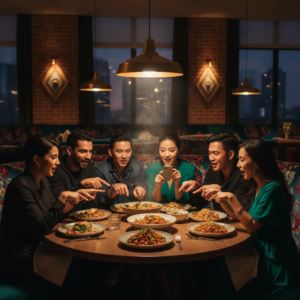
Great food in an uncomfortable setting diminishes the experience. The atmosphere and service of a restaurant tell you as much about the team’s values as the food does — and for families celebrating milestones, couples on date nights, or professionals catching up over dinner, the environment matters enormously.
When you walk into a restaurant, notice how the front-of-house team greets you. Are they attentive without being pushy? Do they know the menu well enough to answer questions with genuine knowledge rather than vague gestures toward the buffet? A staff that’s proud of what their kitchen produces will show it in how they talk about the food.
Cleanliness around the buffet station itself is critical. Spills around chafing dishes that haven’t been wiped, unlabelled trays, or serving utensils left in dishes at odd angles — these small things reflect the care taken across the entire operation. A kitchen that keeps a clean buffet line is almost always a kitchen that keeps a clean prep area.
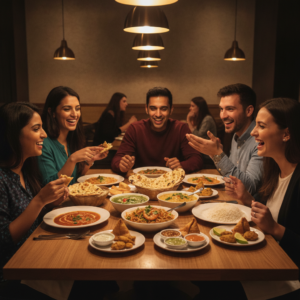
At 7 Spice Bistro in Mississauga, we’ve worked hard to build a space that feels warm and welcoming from the moment you walk in — whether you’re coming in for a casual weeknight dinner or a special occasion with family. We’re conveniently located in the Meadowvale area of Mississauga, making us an easy choice whether you live nearby or are making your way in from another part of the GTA. If you’ve been searching for a reliable Indian restaurant near me that combines quality, comfort, and genuine hospitality, we’d love to be your go-to.
We also offer free WiFi for those who want to catch up on something between courses — a small touch, but one that speaks to how we think about the overall experience for the modern diner.
The Honest Summary: What a Quality Indian Buffet Must Deliver
To bring everything together simply: a buffet worth your time and money must demonstrate freshness, depth of flavour, thoughtful variety, proper food handling, and service that shows the team actually cares. Price is almost never the best indicator of quality — in fact, an unusually low price point is often a signal to look more carefully, not less.
The best all-you-can-eat Indian experiences in the GTA tend to come from restaurants that have been around long enough to develop both their recipes and their sourcing relationships. Seven years in, our team at 7 Spice Bistro has built exactly that — deep familiarity with authentic Indian and Hakka cuisines, a kitchen that treats every tray with the same standard we’d apply to an à la carte plate, and a genuine commitment to making every meal worth coming back for.
Whether you’re a Mississauga local, a GTA resident making the trip out, or simply someone who typed best Indian food near me and found your way here — we think the standards in this guide will serve you well wherever you dine. And if you want to experience them firsthand, we’ll see you at the table.
Ready to Experience Authentic Indian & Hakka Cuisine in Mississauga?
Come dine with us at 7 Spice Bistro — where fresh ingredients, age-old recipes, and a warm Mississauga welcome come together every single day. Explore our menu, plan your visit, or ask us about our catering packages for your next special occasion.
✍️ Written by the 7 Spice Bistro Team
We’re the team behind 7 Spice Bistro — Mississauga’s home for authentic Indian and Hakka cuisines, proudly serving the Greater Toronto Area for over seven years. We write from the kitchen outward, sharing what we know about real Indian food so every guest — and every reader — can dine with confidence.
Frequently Asked Questions
How do I know if an Indian buffet is using fresh ingredients?
The most reliable indicators are aroma, texture, and how dishes are maintained at the buffet station. Fresh Indian food has a vibrant, layered scent — aromatic spices, simmering sauces, and warm bread. Vegetables should be cooked through but not mushy, sauces should look glossy rather than dried at the edges, and staff should be able to tell you when dishes were last refreshed. If the tray rotation is frequent and the kitchen smells active, freshness is almost certainly there.
What makes Hakka cuisine different from traditional Indian food at a buffet?
Hakka cuisine is an Indo-Chinese culinary tradition that brings wok-based cooking techniques, lighter sauces, and soy and chili-forward flavour profiles to the table — very different from the slow-cooked, spice-layered approach of traditional Indian cuisine. At a buffet that offers both, Hakka dishes provide a textural and flavour contrast that makes the overall spread significantly more interesting. Look for Hakka noodles, Manchurian preparations, and chili-tossed proteins alongside the Indian dishes for a truly diverse spread.
Why does the price of an Indian buffet not always reflect its quality?
Price reflects cost structure — not necessarily ingredient quality, freshness, or culinary skill. A restaurant can keep prices very low by using pre-made spice pastes, lower-grade proteins, bulk-frozen vegetables, and preparing everything hours in advance. Conversely, a restaurant using fresh locally-sourced ingredients, cooking in small batches, and maintaining high standards of food handling will have higher costs — and appropriately higher prices. Affordable premium dining exists, but a price that seems too good to be true usually signals corners being cut somewhere in the kitchen.
Can I find Indian and Hakka cuisine together at a restaurant in Mississauga?
Yes — and 7 Spice Bistro in Mississauga is one of the few restaurants in the GTA that genuinely does both well under one roof. Rather than treating Hakka cuisine as an add-on, we’ve built it into our identity alongside traditional Indian dishes, offering diners a full spectrum of South Asian flavour traditions. Whether you’re a longtime fan of Indian curries, curious about authentic Hakka preparations, or looking for a restaurant that satisfies the whole table — our Meadowvale location in Mississauga is worth the visit.