Why Finding the Best Indian Restaurant Toronto Has to Offer Starts With the Biryani
If you’re searching for the best indian restaurant toronto has available in 2026, one dish will tell you almost everything you need to know before you’ve even finished your first bite: the biryani. It’s the great revealer of a kitchen’s honesty. A restaurant that does biryani right — really right — has earned your trust on every other plate they serve. One that cuts corners on biryani is probably cutting corners elsewhere too.
The problem is that not every plate of rice with a sprinkle of saffron deserves the name. Across the Greater Toronto Area, you’ll find everything from lovingly layered, slow-cooked masterpieces to rushed, pressure-cooked bowls of disappointment that borrow the label without earning it. Knowing the difference isn’t food snobbery — it’s just knowing what to look for.
At 7 Spice Bistro in Mississauga, Ontario, we’ve spent seven years perfecting our biryani the old-fashioned way — with patience, layered spicing, and a genuine respect for the dish’s origins. This guide breaks down exactly what separates an authentic dum biryani from a shortcut version, so you can walk into any restaurant — including ours — and know what you’re getting.
⚡ Quick Answer
An authentic dum biryani is slow-cooked in a sealed pot, with rice and marinated protein layered separately and cooked together so the flavours infuse gradually. A shortcut version mixes pre-cooked rice with pre-cooked curry and serves them together — it looks similar but tastes flat, with no depth or smoke. The key giveaways are grain integrity, aroma complexity, and whether the meat was cooked inside the pot or added after.
What Is Dum Biryani, and Why Does the Cooking Method Matter So Much?
Dum biryani is a slow-cooking technique where the pot is sealed — traditionally with dough — and the dish cooks entirely in its own steam. The result is a deeply aromatic, layered rice dish where every grain carries the flavour of the spices, meat, and aromatics around it.
The word “dum” comes from the Persian dam, meaning breath or steam. It’s a cooking philosophy as much as it is a technique — the idea being that great food shouldn’t be rushed. Traditionally, the process involves partially cooking the rice and the marinated protein separately, then layering them together in a heavy-bottomed pot, sealing it tightly, and letting heat do the rest of the work slowly over low flame.
This matters because the layering is what creates that signature biryani complexity. The steam rising from the protein at the bottom flavours the rice from beneath. The whole spices — cardamom, cinnamon, star anise, bay leaves — release their oils gradually into the grain. The caramelized onions, fresh mint, and saffron-laced milk drizzled between layers create those distinct colour variations and aroma pockets you cut through when you serve the dish at the table.
When a kitchen skips this process and simply combines cooked rice with a pre-made curry, none of that infusion happens. The rice tastes like rice. The curry tastes like curry. They just happen to be in the same bowl. That’s not biryani — that’s rice and curry with a marketing upgrade.
“True dum biryani isn’t just a recipe — it’s a commitment. You can’t speed it up without breaking it. Every shortcut you take shows up in the bowl.”
How to Spot a Shortcut Biryani Before You Take a Single Bite
Shortcut biryani has several telltale signs you can identify at the table — no kitchen tour required. The most reliable indicators are grain texture, colour distribution, aroma on arrival, and the condition of the protein.
1. Mushy or Clumped Rice
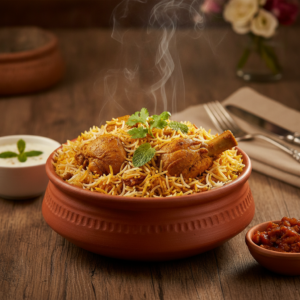
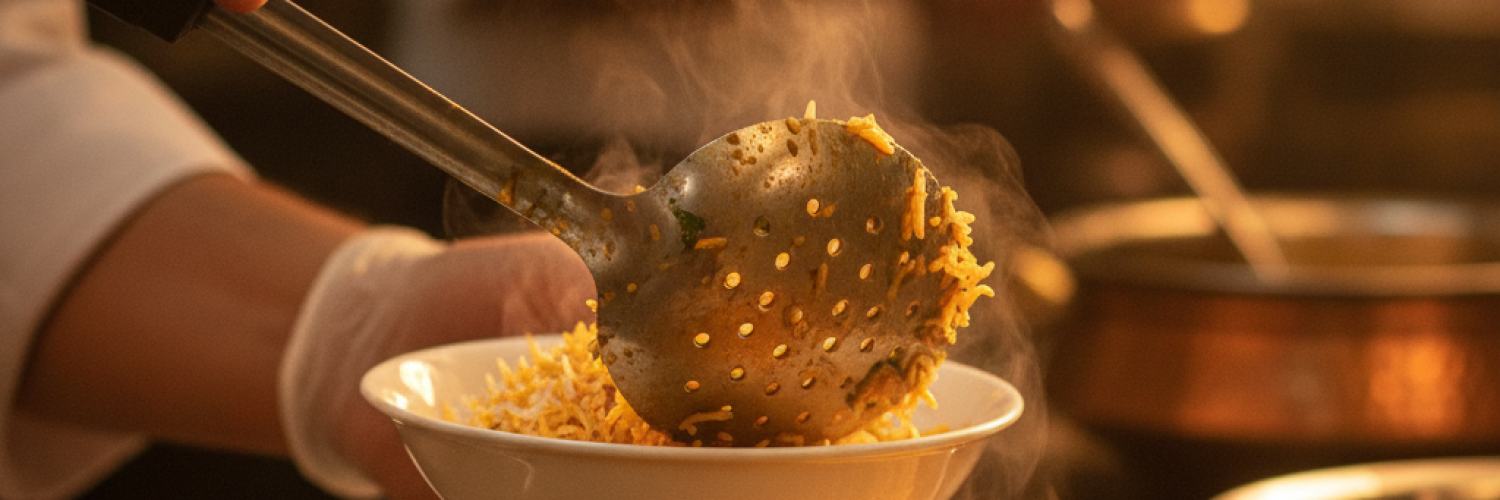
In an authentic dum biryani, every grain of long-grain basmati rice should be separate, fully elongated, and slightly firm to the bite. Rice that’s mushy, clumped together, or starchy-sticky has either been overcooked before the layering stage or — more commonly in shortcut versions — was mixed and stirred after cooking, breaking down the individual grains. Each grain should be its own thing. If you can’t see individual grains, something went wrong.
2. Flat or Single-Note Colour
A properly layered biryani has visible colour variation — bright white rice alongside golden and deep orange-tinged layers from saffron milk, fried onions, and spice contact. A shortcut biryani tends to be uniformly orange-brown because everything was mixed together and tossed. The visual tells you the story of how it was made before you taste it.
3. Aroma That Doesn’t Hit You
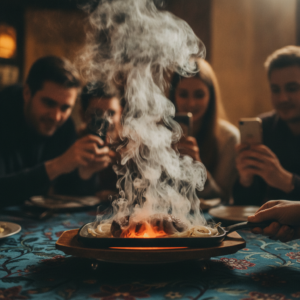
When a dum biryani is served — especially when the sealed pot or dish is opened at the table — it releases a wave of layered aromatics. You should smell the whole spices, the caramelized onion, the saffron, and the marinated protein all at once. A shortcut biryani smells like generic curry powder. It’s not offensive, but it doesn’t have that lift, that moment where the fragrance reaches you before the plate does.
4. Protein That’s Dry or Rubbery
In a genuine dum biryani, the protein is marinated — often for hours — in yogurt, spices, and aromatics before it ever hits heat. That marinade keeps the meat tender and juicy as it cooks inside the sealed pot. Shortcuts skip the long marinade, pre-cook the protein separately, and add it in. The result is pieces of meat that feel like they were added to the dish rather than cooked as part of it. Tender, falling-off-the-bone is the benchmark. Rubbery or dry is the warning sign.
5. It Arrives Too Fast
This one’s practical. A real dum biryani takes time — not just in preparation, but in cooking. If you order biryani and it’s on your table in under ten minutes during a busy dinner service, the kitchen is almost certainly serving a pre-made batch that was reheated. That doesn’t mean it’s terrible, but it’s not dum biryani by any traditional measure. Patience on your plate is the price of the real thing — and it’s worth it.
When you search biryani near me and filter through your options, these five checks will help you read between the lines of a menu. Any kitchen confident in their biryani will usually describe their process — look for words like “slow-cooked,” “dum style,” or “marinated overnight.” Vague descriptions like “flavourful rice dish” are a softer warning.
For more on what to look for when choosing a great sit-down experience, our guide on Dine-In Restaurants: 5 Signs a Place Is Worth Your Evening walks through the broader signals of a kitchen that genuinely cares.
Why Biryani Varies So Much Across India — and What That Means for GTA Diners
Biryani is not one dish — it’s a family of regional dishes that share a technique but differ dramatically in spice profile, protein choice, rice type, and aromatics. Understanding this helps GTA diners know what they’re ordering and what to expect from a well-versed kitchen.
Hyderabadi biryani — arguably the most famous internationally — uses raw marinated meat cooked directly with the rice (kacchi dum method), producing incredibly juicy, deeply spiced results. Lucknowi (Awadhi) biryani uses the pakki dum method, where both components are partially cooked before layering, resulting in a subtler, more fragrant profile. Kolkata biryani adds a boiled potato and a lighter spice hand, reflecting Bengali influences. Malabar and Thalassery biryanis from Kerala use shorter-grain rice varieties and coconut-based aromatics.
Each of these is legitimate. Each requires different knowledge to execute. The point isn’t that one is better — it’s that biryani is a craft with regional depth, and a kitchen that understands this is a kitchen worth visiting. When you encounter a menu that lists only “Chicken Biryani” with no further context, it often signals that the kitchen is producing a generic version rather than honouring any particular tradition.
At 7 Spice Bistro in Mississauga, our biryani draws on North Indian tradition with a few carefully chosen southern influences — the kind of cooking that happens when experienced hands work from memory and intuition as much as from recipe. We use long-grain basmati, whole spices that are freshly tempered, and proteins marinated in-house before every service.
The Mississauga, Ontario dining scene has grown remarkably diverse over the past decade, and that’s raised expectations for authentic South Asian food. Diners here know the difference — and that keeps kitchens like ours honest.
What Goes Into Our Biryani at 7 Spice Bistro — and How We Do It Differently
Our biryani is slow-cooked in the dum tradition, using fresh, locally-sourced ingredients combined with age-old recipes that our team has refined over seven years of service in Mississauga. Here’s what that actually looks like in practice.
The Marinade
Every protein that goes into our biryani is marinated well ahead of service — not as an afterthought, but as the foundation of the dish. We use a base of yogurt with ginger-garlic paste, along with a layered spice blend that includes whole and ground components. The yogurt tenderizes the protein naturally and creates a coating that locks in moisture during the dum cooking process. Skipping this step, or shortening it, is where most rushed kitchens lose the battle.
The Rice
We use aged basmati — the age matters because older basmati has lower moisture content, which means the grains expand more and stay separated during cooking. It’s partially boiled with whole spices (bay leaf, cardamom, cloves) before layering, so the rice already carries fragrance before the dum stage begins. The goal at this point is about 70% cooked — firm enough that it finishes perfectly during the sealing process without overcooking.
The Layers
Layering is the art. The marinated protein goes in first, then a layer of rice, then garnishes — fried onions (birista), fresh mint leaves, chopped coriander, and a saffron milk drizzle. Then another layer of rice, another round of garnish. This is repeated until the pot is filled, and then it’s sealed and placed on low heat. The steam builds slowly, finishing the protein from the bottom and perfuming the rice from all sides simultaneously.
Fresh, Local Ingredients
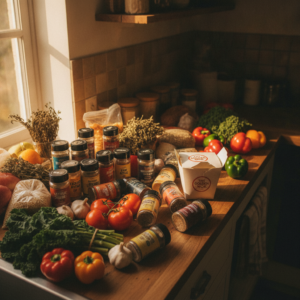
We source locally where we can because fresh ingredients at the start make every stage downstream easier. Fresh aromatics — real ginger root, whole garlic, fresh mint — carry oils that dried or pre-processed versions simply don’t have. When those oils release inside a sealed pot, that’s what creates the aroma moment that hits you when the dish is uncovered at the table.
If you’re searching for indian food near me and you want to understand what a kitchen is actually doing, asking about their biryani process is one of the fastest ways to find out. A kitchen that can tell you — in plain terms — how their biryani is made is a kitchen you can trust with your whole meal.
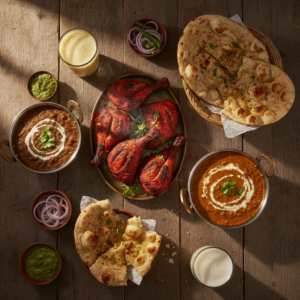
Beyond biryani, we also serve a full menu of Indian classics alongside our Hakka Chinese offerings and fresh seafood — making 7 Spice Bistro one of the more genuinely varied spots to explore in Mississauga, Ontario. Whether you’re coming in for dine-in or planning a larger gathering, our team brings the same care to every plate and every event. For those exploring catering options, our Indian Catering Services: 6 Questions to Ask Before You Book guide is a strong starting point.
Where to Find Authentic Biryani Near Me in the Greater Toronto Area
Authentic biryani in the GTA is absolutely available — but you need to know where to look and what questions to ask. The Greater Toronto Area has a large and well-established South Asian community, which means the standard for authenticity is genuinely high. Diners here grew up eating the real thing, and restaurants that cut corners tend to find out quickly.
When you’re searching for indian restaurant near me specifically for biryani, here’s a practical shortlist of what to look for on the menu and at the table:
- Does the menu specify a biryani style (Hyderabadi, Lucknowi, Malabar)? Specificity signals knowledge.
- Is there a raita on the side? Traditional biryani is always served with raita — it’s not an add-on, it’s part of the dish. A restaurant that serves it as standard knows their biryani etiquette.
- Does the server know how it’s made? Front-of-house staff at a good restaurant can describe the cooking method because the kitchen is proud of it.
- Are the grains visible and separate when the dish arrives? You should see layers, not a homogeneous mound.
- Does it smell before you taste it? Aroma on arrival is a reliable signal of whole spice use and proper steam cooking.
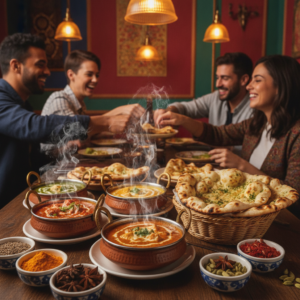
7 Spice Bistro is located in Mississauga, Ontario — conveniently positioned for families and professionals across the GTA, including those coming from Brampton, Oakville, and the west end of Toronto. We’re a genuine sit-down restaurant with a warm, family-friendly atmosphere, and our biryani is cooked to order with the care that deserves.
Whether you’re exploring Indian food for the first time or you’ve been eating biryani your whole life and know exactly what you’re looking for, we’d love to have you at our table. The benchmark is the bowl — and ours is one we’re proud to put in front of you.
Ready to Taste the Real Thing?
Come in and experience authentic dum biryani — slow-cooked the traditional way — at 7 Spice Bistro in Mississauga. Dine in with family, book a table for a special evening, or explore our catering packages for your next celebration. Our team is ready to welcome you.
✍️ Written by the 7 Spice Bistro Team — We’re the people behind the kitchen in Mississauga, Ontario, bringing seven years of authentic Indian and Hakka cuisine to families, couples, and professionals across the Greater Toronto Area. Every article we write comes from the same place as every dish we serve: genuine care for the food and the people eating it.
Frequently Asked Questions
How can I tell if a biryani is authentic dum-cooked or just mixed rice and curry?
Look for three things: grain integrity (separate, elongated basmati that hasn’t been stirred into mush), layered colour (white, golden, and orange-tinged rice from saffron and fried onions rather than uniform brown), and aroma on arrival. A genuine dum biryani releases a multi-layered fragrance the moment it’s uncovered. If it arrives quickly, looks uniform, and smells like a single curry note, it was almost certainly not slow-cooked in the dum tradition.
What makes 7 Spice Bistro different from other Indian restaurants in Mississauga?
We bring seven years of focused experience in authentic Indian cuisine to every plate, using fresh locally-sourced ingredients combined with age-old recipes passed down through culinary tradition. Beyond Indian food, we also offer Hakka Chinese cuisine and fresh seafood — making us a genuinely diverse kitchen rather than a single-note menu. Our atmosphere is warm and family-friendly, and our pricing keeps premium-quality dining genuinely accessible.
Why does the marinade matter so much in a proper biryani?
The marinade is where the flavour journey of the protein begins. A yogurt-based marinade with ginger, garlic, and a layered spice blend does two things: it tenderizes the meat naturally through the mild acidity of the yogurt, and it creates a flavour coating that releases into the rice during the sealed cooking process. Skip the marinade — or shorten it — and you lose both the tenderness of the protein and the depth of flavour that makes a great biryani taste like more than the sum of its parts.
Can I order from 7 Spice Bistro for a large event or wedding?
Absolutely. We offer full-service catering and wedding packages with personalized service — including biryani and a full range of Indian and Hakka dishes prepared fresh for your event. Whether you’re planning an intimate family celebration or a larger occasion, our catering team works with you directly to build a menu that fits your guest list and your occasion. You can learn more about what to ask and what to expect in our guide to Indian Catering Services: 6 Questions to Ask Before You Book, or visit us at 7 Spice Bistro to get started.