Why Searching “Noodles Near Me” Led You to Something Completely Different
If you’ve ever searched noodles near me and ended up discovering Hakka noodles for the first time, you already know the feeling — that first forkful that stops you mid-conversation and makes you wonder why you didn’t try this sooner. In 2026, Indo-Chinese food is having a serious moment across the Greater Toronto Area, and for good reason. Hakka noodles sit at one of the most exciting culinary crossroads in the world, combining two of the boldest food cultures on the planet into a dish that is entirely its own thing.
At 7 Spice Bistro in Mississauga, Ontario, Hakka noodles have been one of our most-ordered dishes since the day we opened. Families come in asking for them by name. Couples discover them for the first time on date nights and order seconds. Professionals picking up lunch keep coming back for that unmistakable hit of wok heat and spice. The dish earns its fans fast — and keeps them forever.
But what actually makes Hakka noodles different? Why do they taste nothing like the noodles you’d get at a Chinese takeout counter, or the pasta dishes you grew up with, or even other Indian noodle preparations? That’s exactly what we’re breaking down here — the spices, the technique, the texture, and the cultural story that makes this dish one of the most distinctive plates you can order anywhere in Mississauga.
⚡ QUICK ANSWER
Hakka noodles are different from other noodle dishes because they combine Chinese-style stir-fry technique with Indian spices, aromatics, and heat levels — creating a bold, smoky, intensely flavoured dish that belongs to neither cuisine alone. The result is a uniquely Indo-Chinese experience shaped by a specific diaspora history, cooked over high wok heat with ingredients like green chillies, soy sauce, vinegar, and a precise blend of spices that you simply won’t find in any other noodle tradition.
What Exactly Are Hakka Noodles? The Origin Story Matters
Hakka noodles are a product of the Indian-Chinese community — specifically, the Hakka Chinese people who migrated to Kolkata (then Calcutta) in the 18th and 19th centuries and gradually built a food culture that merged their own culinary traditions with the bold, spice-forward flavours of the Indian subcontinent. The dish is not authentically Chinese in the traditional sense, and it’s not purely Indian either. It is Indo-Chinese — its own distinct culinary identity.
The Hakka people are a subgroup of the Han Chinese with their own dialect and culinary customs. When they settled in India, they adapted their recipes using locally available ingredients — Indian chillies, native vinegars, mustard oil, and spice combinations that had no equivalent back in China. Over generations, this produced a cuisine that looks Chinese but tastes unmistakably South Asian in its intensity and heat.
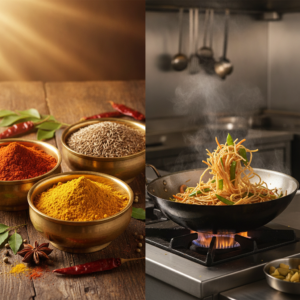
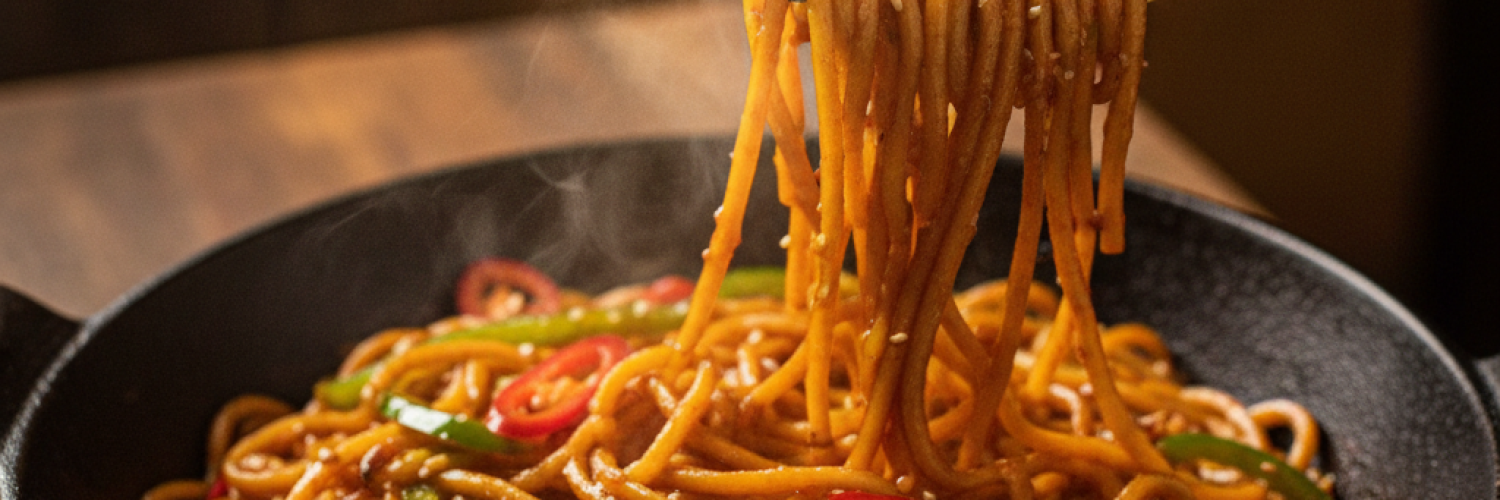
Hakka noodles — sometimes called chow mein in casual parlance but distinct in preparation — are typically made from thin, wheat-based noodles that are parboiled and then stir-fried over very high heat in a wok. The cooking process itself is part of what creates the dish’s character: the quick, intense wok heat produces a slight char and smokiness that you simply cannot replicate on a standard home stovetop or in a conventional oven.
“Hakka noodles are not a fusion experiment — they are a fully realized cuisine born from generations of adaptation, necessity, and creativity. Every element of the dish reflects a specific cultural negotiation between two great food traditions.”
This is why when you search hakka food near me and land on a genuine Indo-Chinese restaurant like ours in Mississauga, you’re tapping into something with real depth — a dish that carries its entire history in every bite.
How Are the Spices and Flavours Different From Every Other Noodle?
The flavour profile of Hakka noodles is what sets them apart most dramatically — and it’s worth understanding exactly how each component contributes to the final dish.
Traditional Chinese noodle dishes rely on umami depth from soy sauce, the sweetness of oyster sauce, and the clean heat of white pepper. Japanese ramen builds its flavour from long-cooked broths and carefully balanced tare. Italian pasta prioritises the quality of the noodle itself and a short ingredient list. None of these approaches resemble what goes into Hakka noodles.
The Signature Flavour Components
A properly made plate of Hakka noodles involves a layered approach to flavour that draws from both traditions simultaneously:
Green chillies and red chilli sauce — Indian in character, providing sharp, fresh heat rather than the slow-burning depth of chilli oil used in Chinese cooking. The heat in Hakka noodles hits quickly and clearly, and it’s meant to.
Dark soy sauce and light soy sauce — used together to create both colour depth and a savoury base that anchors the dish in its Chinese heritage. The ratio and quality of soy sauce matters enormously; too much and the noodles become heavy, too little and they taste flat.
Vinegar — a defining element of Indo-Chinese cooking that you rarely encounter in traditional Chinese noodle dishes. Typically a rice vinegar or a sharper malt-style vinegar, it cuts through the richness and adds an acidity that keeps each bite lively.
Aromatics: ginger, garlic, spring onion — cooked at high speed in hot oil to bloom their flavour rapidly rather than sweating them slowly. This produces a sharper, more intense aromatic hit than you’d get in a dish where these ingredients are cooked low and slow.
Wok hei — this is the “breath of the wok,” the slight smokiness and char that only comes from cooking at very high temperatures. It’s not a spice or an ingredient — it’s a result of the cooking method, and it’s one of the things that makes restaurant Hakka noodles taste impossible to fully replicate at home.
Put these together and you get something that is simultaneously familiar and unexpected — a dish that has the visual cues of Chinese cooking but carries the bold, unapologetic flavour intensity of Indian cuisine. That’s the signature of genuine Indo-Chinese food, and it’s why people who find indo chinese food near me for the first time rarely stop at one visit.
What Makes the Texture of Hakka Noodles Unique?
Texture in Hakka noodles is not an afterthought — it is a core part of the dish’s identity, and getting it right requires both the correct noodle and precise cooking technique.
The noodles used are typically thin, slightly chewy wheat noodles that are parboiled until just cooked through, then cooled and dried before hitting the wok. This two-stage process is critical. Noodles that are too soft going into the wok will absorb oil unevenly and turn mushy. Noodles that are too dry will break apart and lose their structure.
When properly prepared noodles meet a properly heated wok with the right amount of oil, something specific happens: the exterior of each strand gets a very slight crisp to it, while the interior stays tender and chewy. This dual-texture quality — that simultaneous bounce and subtle bite on the outside — is what separates well-made Hakka noodles from a version that is simply stir-fried noodles with Indian spices.
The vegetables added — typically julienned cabbage, capsicum, carrots, and spring onion — are cooked at the same high heat but for a very short time, which means they retain their crunch. The contrast between the yielding noodles and the snappy vegetables is intentional and important. It gives each forkful a complexity of texture that keeps the dish interesting bite after bite.
This is meaningfully different from Italian pasta, where the goal is uniform tenderness (al dente but not crisp), and equally different from Japanese ramen, where the noodle is designed to absorb and carry broth. Hakka noodles are a dry-style dish — they carry their sauce as a coating, not as a pool, which is another reason the texture of the noodle itself must be strong enough to hold up.
At 7 Spice Bistro, we’ve spent seven years refining our Hakka noodle preparation across both our dine-in experience and our catering service. The technique matters, and we don’t cut corners on it — not when customers in Mississauga have made this one of their most-requested dishes on our menu.
For more on what makes a dine-in experience genuinely worth your time, take a look at our piece on Dine-In Restaurants: 5 Signs a Place Is Worth Your Evening — many of those signals apply directly to how we approach every plate that leaves our kitchen.
Why Is Hakka Noodles Not the Same as Regular Chow Mein or Lo Mein?
Hakka noodles, chow mein, and lo mein look similar at a glance but are fundamentally different dishes — in flavour, technique, and cultural context.
Chow mein (from the Cantonese “fried noodles”) is a broad category that encompasses many Chinese regional styles. At its most traditional, Cantonese chow mein features crispy pan-fried noodles topped with a light, savoury sauce — minimal spice, delicate seasoning, restrained flavour. Even stir-fried versions of chow mein tend toward subtlety, using mild sauces and a shorter ingredient list.
Lo mein, by contrast, uses softer, thicker noodles tossed in sauce after cooking rather than fried with it. The result is a more heavily sauced dish, often sweeter, with a soft noodle texture that absorbs the sauce rather than being coated by it. Lo mein is a North American Chinese-restaurant staple, but it shares almost nothing with the flavour profile of Hakka noodles beyond the use of wheat noodles.
Hakka noodles are different from both in three decisive ways:
Heat level — Hakka noodles are genuinely spicy in a way that reflects Indian chilli culture, not the milder heat typical of most Chinese noodle dishes. The green chilli and chilli sauce are not optional garnishes — they are structural to the flavour.
The vinegar note — This sharp, tangy element is characteristic of Indo-Chinese cooking and almost entirely absent from traditional chow mein or lo mein. It cuts through the soy and oil in a way that makes the dish taste brighter and more complex.
Cultural intention — Chow mein and lo mein are Chinese dishes adapted for various markets. Hakka noodles are an Indo-Chinese dish that was never trying to be Chinese — it was built from the ground up as something new, inside a specific Indian community, for that community’s tastes.
When people search hakka near me specifically — rather than just Chinese food or noodles in general — they’re often already aware of this distinction. They know what they’re looking for, and they want the real thing.
Where to Experience Authentic Hakka Noodles in Mississauga
Mississauga is one of the most diverse cities in Canada, and that diversity shows in its food scene — but finding truly authentic Hakka noodles still requires knowing where to look. Not every restaurant that lists “Hakka noodles” on its menu has the kitchen experience or the fresh ingredients to do the dish justice.
At 7 Spice Bistro in Mississauga, Ontario, our Hakka menu is built on seven years of experience preparing both Indian and Indo-Chinese cuisine with fresh, locally sourced ingredients and recipes that have been refined through genuine kitchen practice — not shortcuts. We use fresh vegetables, quality soy sauces, real chillies, and the high-heat technique that gives Hakka noodles their characteristic wok smokiness.
Our restaurant in the Meadowvale area of Mississauga is designed to be a comfortable, family-friendly space where you can sit down with the people you care about and eat something genuinely good. We’re not a quick-service counter — we’re a proper dine-in restaurant with real hospitality, where the food is made carefully and the atmosphere feels welcoming to everyone from families with kids to couples on a weeknight dinner to professionals meeting over lunch.
If you’re planning a larger event, our catering service includes Hakka dishes as part of a full Indo-Chinese spread, and we’ve served this food at weddings, celebrations, and corporate gatherings across the GTA. You can find everything you need to know before booking in our guide to Indian Catering Services: 6 Questions to Ask Before You Book — it walks through every practical question you should be asking any caterer before you commit.
We also serve the wider GTA community, including guests who travel from neighbouring areas to eat with us in Mississauga, Ontario. If you’re coming from slightly further afield, our post on Indian Restaurants in Milton: What Nearby Diners Should Know offers some useful context for the broader regional dining landscape.
Whether you’re a longtime fan of Indo-Chinese cuisine or someone who just discovered it by searching for restaurants near me on a hungry Thursday evening, we’d love to be the restaurant that changes what you expect from a noodle dish. Come in, order the Hakka noodles, and see what all the talk is about.
Ready to Try the Real Thing?
Come experience authentic Hakka noodles and Indo-Chinese cuisine at 7 Spice Bistro in Mississauga, Ontario. Dine in with your family, bring a group, or book our catering service for your next event. Fresh ingredients, seven years of expertise, and flavours that speak for themselves.
✍️ Written by the 7 Spice Bistro Team
We’re the team behind 7 Spice Bistro in Mississauga, Ontario — seven years of serving authentic Indian and Hakka cuisine to families, couples, and the wider GTA community. Every article we write comes from real kitchen experience and a genuine love for the food we serve.
Frequently Asked Questions
What makes Hakka noodles different from regular noodles?
Hakka noodles are distinct because they combine Chinese stir-fry technique with Indian spices, green chillies, vinegar, and wok-heat intensity — creating a flavour profile that is bolder, spicier, and more complex than traditional Chinese noodle dishes or any other noodle tradition. The result is a uniquely Indo-Chinese dish with its own history, technique, and taste.
How spicy are Hakka noodles, and can the heat be adjusted?
Hakka noodles are inherently spicy by design — the heat from green chillies and chilli sauce is part of the dish’s identity, not just a seasoning option. That said, a good kitchen can adjust the heat level to suit different preferences. At 7 Spice Bistro in Mississauga, we’re happy to discuss spice levels when you order so the dish suits your taste without sacrificing its character.
Why does restaurant Hakka noodles taste better than homemade versions?
The main reason is wok hei — the smoky, slightly charred quality that only comes from cooking at extremely high heat in a seasoned commercial wok. Home stoves simply don’t generate enough heat to replicate this effect. Professional kitchens also use proper noodle preparation techniques and fresh ingredients that ensure the right texture and flavour balance on every plate.
Can I order Hakka noodles as part of a catering package for a large event?
Yes — at 7 Spice Bistro, our full-service catering packages include Hakka and Indo-Chinese dishes alongside our broader Indian menu, making them a popular choice for weddings, family celebrations, and large gatherings across Mississauga and the GTA. Our team works with you personally to build a menu that fits your event size, preferences, and budget.