Why Pooja Catering Is Unlike Any Other Event You’ll Plan
If you’ve been searching for an indian restaurant brampton or Mississauga that truly understands how to cater a religious gathering — not just any gathering — you already know how rare that combination of cultural knowledge and culinary skill actually is. Planning food for a pooja, a path, a satyanarayan katha, or any devotional ceremony is a deeply personal responsibility. The food isn’t just fuel. It’s part of the ritual itself.
In 2026, more GTA families are hosting meaningful religious gatherings at home, in banquet halls, and at community centres than ever before. And yet, finding a caterer who genuinely respects those traditions — who understands why you can’t serve garlic in certain prasad dishes, or why the sequencing of food service during a ceremony actually matters — is still surprisingly difficult.
At 7 Spice Bistro, we’ve spent seven years building relationships with families across Mississauga, Ontario who trust us not just with their hunger, but with their most sacred occasions. This post is our honest guide to what makes pooja catering different, and what you should know before you hire anyone for your next religious event.
⚡ QUICK ANSWER
Catering for a pooja or religious gathering is fundamentally different from catering a birthday party or corporate lunch because the food carries ritual meaning. Menu restrictions, ingredient purity, timing of service, and presentation all need to align with the specific ceremony — not just with general taste preferences. A caterer who doesn’t understand these nuances can unintentionally disrupt the sanctity of your event. At 7 Spice Bistro in Mississauga, Ontario, we work with families to understand the exact requirements of their ceremony before a single dish is planned.
What Makes the Food at a Religious Gathering Sacred, Not Just Special?
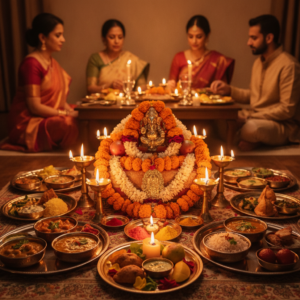
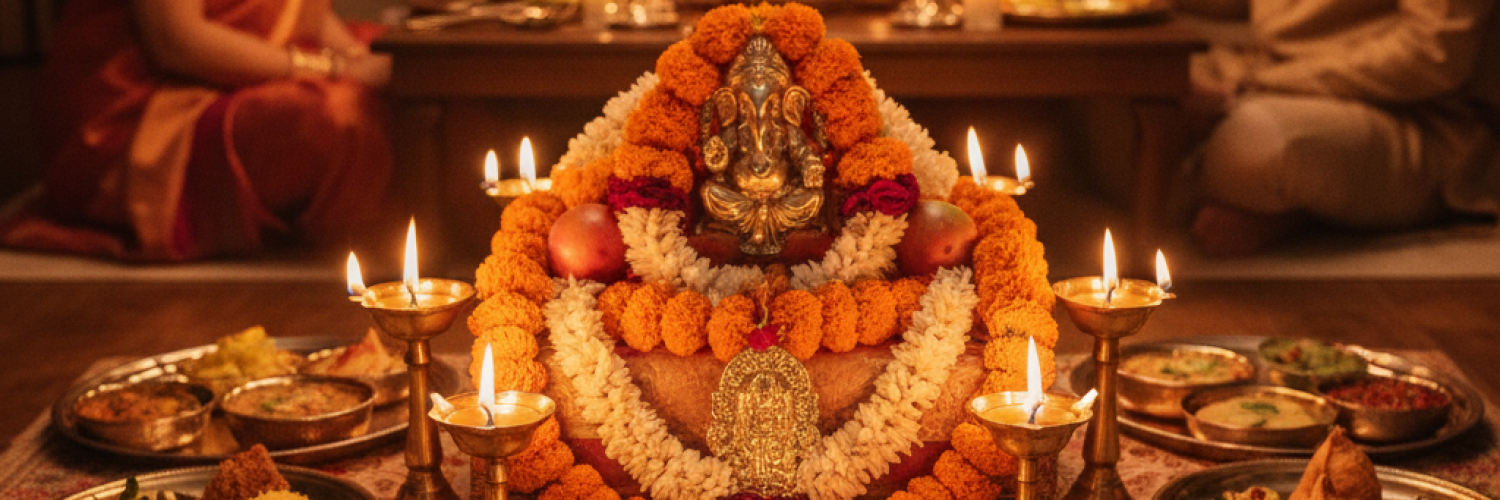
The food served at a pooja isn’t simply a meal — it is prasad, an offering first made to the divine and then shared with guests as a blessing. This distinction changes everything about how the food must be prepared, handled, and presented.
Most religious Hindu ceremonies require food that is sattvic in nature — pure, light, and free from ingredients believed to agitate the mind or body. This typically means no onion, no garlic, and often no meat. The emphasis is on wholesome grains, lentils, dairy, fresh vegetables, and naturally sweet offerings like kheer, sheera, or panjiri. Every ingredient carries intention, and a caterer who doesn’t know this will almost certainly get it wrong.
When families reach out to us after searching for indian food near me or looking for a trusted catering service in Mississauga, the first questions we ask are: What ceremony are you hosting? What is the religious community involved? Are there specific pandit requirements for how the food should be prepared? These aren’t bureaucratic questions — they’re the foundation of getting it right.
“Food prepared for a pooja is not background catering. It is a participant in the ceremony. The caterer you choose needs to understand that responsibility.”
Beyond the spiritual dimension, there are also practical differences. The timing of prasad distribution is often tied to specific moments in the pooja — after the aarti, after the mantra recitation, or at the conclusion of the ceremony. A caterer who shows up and sets a buffet on autopilot will disrupt the flow. Our team coordinates directly with the family and, where appropriate, with the pandit, to ensure the food is ready exactly when it needs to be — not a minute too early, not a minute too late.
How Is Planning a Pooja Menu Different From Planning a Regular Event Menu?
Planning a pooja menu is different because the starting point is the ceremony itself — its specific religious tradition, the deity being honored, and the community’s regional customs — not a list of popular dishes.
A birthday party menu starts with the guest of honor’s preferences. A corporate lunch starts with dietary logistics. A pooja menu starts with something deeper: What does this ceremony call for? A Satyanarayan Puja, for example, traditionally features panchamrit (a mixture of milk, curd, honey, ghee, and sugar), along with panjiri and fruit. A Navratri gathering may require a strict menu that avoids grains altogether. A Griha Pravesh ceremony has its own set of food customs tied to invoking prosperity and protection for a new home.
Families across Mississauga, Ontario come from diverse regional backgrounds — Punjabi, Gujarati, South Indian, Maharashtrian — and each brings its own layered food traditions to religious events. What’s appropriate at a Gujarati pooja may be quite different from what’s expected at a Punjabi path. A caterer who treats “Indian food” as a monolith will miss these distinctions entirely.
At 7 Spice Bistro, our seven years of experience in authentic Indian cuisine mean we’ve built real familiarity with these regional differences. We don’t offer a one-size-fits-all “religious event package” and call it done. We listen, we ask the right questions, and we build a menu that genuinely fits the occasion. If you’ve been searching for best food near me for a pooja or ceremony, you deserve a caterer who will take that extra step.
For those curious about how we approach Indian flavour combinations and building menus for groups, our post on Biryanis, Curries, and Kebabs: How to Build the Perfect Indian Feast for a Group gives a good sense of how intentionally we approach food planning for large gatherings.
The Post-Ceremony Meal: A Whole Different Requirement
Most religious gatherings have two distinct food moments: the prasad offered during the ceremony itself, and the community meal served afterward. These are not the same event, and they shouldn’t be planned the same way.
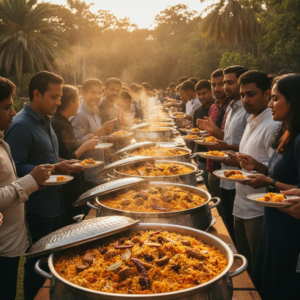
The post-ceremony meal is often a full langar-style spread or a warm family-style lunch where the rules relax slightly — richer curries, pulao, paneer dishes, and sometimes even non-vegetarian items, depending on the family and community. Managing the transition between these two moments requires a caterer who stays present, attentive, and flexible — not one who drops off food and disappears.
Our full-service catering team handles both phases with care, including setup, service, and cleanup, so the family can focus on the ceremony rather than the logistics.
Why the Right Caterer for a Religious Event Is Harder to Find Than You Think
Finding the right caterer for a religious gathering is genuinely harder than finding one for a wedding or corporate event, because cultural literacy matters as much as cooking skill — and not every caterer has both.
Many families in the GTA — from Mississauga to Brampton to Toronto — have had the experience of hiring a caterer who could produce decent food but didn’t understand the ceremony context. The garlic ended up in the dal. The food arrived 45 minutes late and disrupted the aarti. The prasad was served in disposable containers when the family expected proper presentation. These aren’t trivial mistakes — they affect the experience of an occasion that the family has planned and looked forward to for months.
People searching for an indian restaurant toronto or a nearby caterer for religious events often end up scrolling through generic results that don’t actually reflect ceremony-specific expertise. The same is true for those looking for indian food brampton — the search results show restaurants and caterers, but the listing alone can’t tell you whether the team truly understands what a pooja requires.
What you need to look for — and what we pride ourselves on at 7 Spice Bistro — is a team that asks the right questions before they quote a price. If a caterer jumps straight to “how many guests and what’s your budget” without first asking about the ceremony, that’s a warning sign.
What Questions Should You Ask a Caterer Before Booking for a Pooja?
Here are the questions we recommend every family ask before confirming a catering booking for a religious gathering:
- Do you have experience catering for religious ceremonies specifically — not just general Indian events?
- Can you accommodate sattvic cooking requirements (no onion, no garlic) if needed?
- Do you cook prasad dishes separately from other items to maintain purity?
- Can you coordinate timing with the ceremony schedule or the pandit’s plan?
- Do you provide full-service setup and cleanup, or just drop-off?
- Can you cater both the ceremonial prasad and the post-ceremony community meal?
- Are your team members familiar with the specific traditions of our regional community?
These questions will quickly separate caterers who understand religious events from those who are simply offering to cook Indian food at your location. The difference matters enormously when the occasion is sacred.
How 7 Spice Bistro Approaches Religious and Cultural Event Catering in Mississauga
At 7 Spice Bistro, our approach to religious event catering is built on one principle: the occasion sets the standard, not our convenience.
Every catering consultation for a pooja or religious gathering begins with a detailed conversation — not a form, not a questionnaire, a real conversation. We want to understand the ceremony, the family’s background, any pandit or priest guidance they’ve received, and the guest list composition. Are grandparents attending who expect traditional preparation methods? Are there children who need milder options alongside the ceremonial food? Is the event indoors at a home or at a rented hall in Mississauga, Ontario?
We use fresh, locally sourced ingredients in all of our cooking — not just for our dine-in guests at the restaurant, but for every catering order that leaves our kitchen. When we make suji halwa for prasad, it’s made with real ghee, fresh semolina, and care. When we prepare a post-ceremony dal makhani for 80 guests, it’s slow-cooked with the same attention we’d give to a table of four in our dining room.
We’ve served families across the GTA who originally found us by searching for a hakka near me for a casual dinner, or looking for noodles near me after a long day — and who came back to trust us with their most important family events. That progression from casual dining to cherished catering partner is something we take seriously, and it’s why word-of-mouth is such a significant part of how families in Mississauga find us.
We also recognize that many GTA families hosting religious gatherings don’t live in just one city. The host might be in Mississauga while extended family comes in from Brampton, Toronto, or further. We’re set up to serve events across the Greater Toronto Area, and our logistics team ensures that distance doesn’t compromise quality or timing.
If you’re exploring your dining and neighbourhood options in the area, our guide to Dining Out in Mississauga: A Neighbourhood-by-Neighbourhood Food Guide is a great resource for understanding the local food landscape. And if you’re curious about how our kitchen handles seafood as part of a larger catering spread, take a look at our post on Seafood Chowder Recipe: Everything to Know Before You Decide to see the care we put into every dish we prepare.
Affordable Quality Without Cutting Corners
One concern we hear often from families planning a pooja is budget. Religious gatherings are frequently large, multi-generational events, and the guest count can grow quickly. Families worry that quality catering — the kind that actually understands ceremony food — will be priced out of reach.
Our philosophy at 7 Spice Bistro has always been that authentic, premium-quality Indian food should be accessible. We’ve built our pricing to reflect real value — fresh ingredients, skilled preparation, attentive service — without the inflated costs that some event caterers add simply because they know families feel they can’t compromise on a special occasion.
Families searching for an indian restaurant near me for a sit-down meal and families contracting us for full religious event catering get the same standard of cooking. That consistency is something we’ve worked to build over seven years in Mississauga, Ontario, and it’s a standard we don’t lower for any event, regardless of size.
Planning a Pooja or Religious Gathering?
Let’s have a real conversation about your ceremony, your community’s food traditions, and how our team at 7 Spice Bistro can serve your event with the respect and care it deserves. Families across Mississauga, Ontario and the Greater Toronto Area trust us with their most meaningful occasions — we’d be honoured to earn that trust from you too.
✍️ Written by the Team at 7 Spice Bistro
We’re the people behind the stoves, the menus, and the catering tables at 7 Spice Bistro in Mississauga, Ontario — seven years in and still cooking every dish like the occasion matters, because it always does. When we’re not feeding families in our dining room, we’re working directly with communities across the GTA to make sure their most important celebrations are served with authenticity, care, and food that actually means something.
Frequently Asked Questions
How far in advance should I book catering for a pooja or religious gathering?
We recommend reaching out at least three to four weeks before your ceremony, and earlier if your gathering is large or involves complex ceremonial menu requirements. Religious event catering requires more planning time than a standard catering order — we need to understand your ceremony, source the right ingredients, and coordinate logistics around your specific schedule. At 7 Spice Bistro, we accommodate consultations well in advance so nothing feels rushed and the food honours the occasion properly.
What types of religious or cultural events does 7 Spice Bistro cater for?
We cater for a wide range of religious and cultural gatherings, including poojas, paths, satyanarayan kathas, navratri gatherings, griha pravesh ceremonies, and other devotional occasions observed by South Asian families across Mississauga and the Greater Toronto Area. We’re also experienced in catering for cultural celebrations, family milestones, and community events that have specific food traditions attached to them. Every event is approached individually — we never apply a generic template to a gathering that deserves a personalized one.
Why can’t I just use any Indian caterer for a religious ceremony?
You can hire any caterer, but not every caterer will understand what a religious ceremony requires from its food. Sattvic cooking guidelines, ingredient restrictions, timing coordination with the ceremony, and proper presentation of prasad are all details that require both cultural familiarity and culinary skill. A caterer who doesn’t ask the right questions before planning your menu is unlikely to meet the specific standards your ceremony calls for — and in a religious context, those details matter deeply to the family and the community present.
Can I include non-vegetarian dishes in the post-ceremony meal even if the pooja itself was vegetarian?
Yes, in many family and community traditions, the post-ceremony meal is separate from the sacred prasad portion of the event and can include a broader menu that reflects the family’s preferences. Whether you’d like a full vegetarian spread or a mixed menu that includes meat, seafood, or Hakka-style dishes for the reception portion of your gathering, our team at 7 Spice Bistro will plan both phases of your event as distinct, thoughtfully prepared experiences. We’ll work with you to ensure the transition between ceremonial and community dining feels seamless and respectful of the occasion.